
Ways to Preserve Garlic: Storage, Freezing, Drying, Pickling, and More
This post may contain affiliate links, which means that I may receive a commission if you make a purchase using these links. As an Amazon Associate I earn from qualifying purchases.
Have a big garlic harvest? Learn how to preserve garlic by curing and storing whole bulbs, freezing cloves, dehydrating garlic for powder, making refrigerator pickles, and using garlic safely in tested canning recipes.

Garlic is one of those crops I try to grow enough of each year because I use it in almost everything. It adds flavor to soups, stews, sauces, roasted vegetables, salad dressings, marinades, bread, and so many of our everyday meals.
Here in Maine, the garlic harvest begins in early summer when the hardneck varieties send up their curly scapes. Several weeks later, usually around mid-July, the lower leaves begin to brown, signaling that the bulbs are nearly ready to dig.
Once harvested, I spread the garlic on wire shelving in our basement to cure. We run a dehumidifier during the humid summer months, and I sometimes add a small fan to keep the air moving around the bulbs. After the garlic is fully cured, I trim and sort it, reserve the largest and healthiest bulbs for planting in the fall, and decide how to preserve the rest.
The best bulbs are stored whole for winter cooking. Bulbs with split or loose wrappers, exposed cloves, or minor damage are used first or preserved by freezing, dehydrating, or refrigerator pickling.
If you are still planning your garden, start with How to Grow Garlic for tips on selecting varieties, planting cloves, caring for the plants, harvesting scapes, and growing healthy bulbs to preserve.
But, if you are wondering how to preserve garlic from your garden, you have several good options. This guide will walk you through each method so you can choose what works best for your harvest, storage space, and the way you cook.
Before You Preserve Garlic
Before deciding how to preserve your garlic, take some time to sort through the harvest.
Set aside the largest, healthiest bulbs with full cloves for planting in the fall. Saving your best bulbs each year helps you grow garlic that is well adapted to your garden and local growing conditions.
Next, select the firmest, most fully wrapped bulbs for long-term storage. The bulbs should be mature, properly cured, and free from soft spots, mold, and damage.

Garlic bulbs with split wrappers, exposed cloves, bruises, or minor harvest damage may still be perfectly good to eat, but they probably won’t keep as long. Plan to use these first or preserve the sound cloves by freezing or dehydrating them.
Discard garlic that is moldy, badly decayed, or soft throughout. Preserving will not improve garlic that has already begun to spoil.
If you grow several garlic varieties, keep them separated and labeled. Some types naturally store much longer than others. Using the shorter-storing varieties first will help you make the most of the harvest without losing bulbs to spoilage.
This is also a good time to think about how you use garlic in the kitchen. Whole frozen cloves offer plenty of flexibility, minced garlic makes meal preparation easier, and dried garlic flakes or powder provide compact pantry storage.
Cure and Store Whole Garlic Bulbs
The simplest way to preserve garlic is to cure it properly and store the bulbs whole. This is the method I rely on most because it lets me use the garlic much as I would when it was freshly harvested.
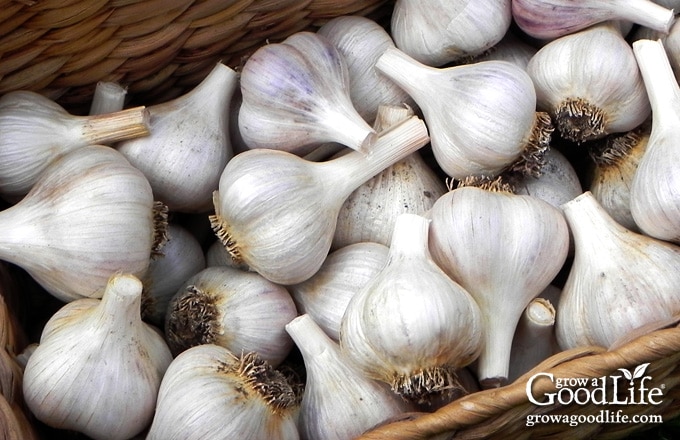
Curing allows the foliage, roots, and outer wrappers to dry. As the garlic cures, the papery layers shrink and tighten around the cloves, forming a natural protective covering that helps the bulb last longer in storage.
Choose a shaded, dry place with good air circulation. Avoid curing garlic in direct sunlight or in a closed location where heat and moisture can build up.
I spread my garlic in a single layer on wire shelving in our basement. The dehumidifier removes excess summer moisture, and a small fan can be used when additional airflow is needed. Garlic can also be bundled and hung in a dry, shady, well-ventilated shed, barn, garage, or other protected location.
Depending on humidity and airflow, curing may take several weeks. The garlic is ready when the foliage is dry and crunchy and the skins surrounding the bulbs feel papery.
To check, cut through one stem an inch or two above the bulb. There should be no green remaining in the center of the stalk. If you still see green, allow the bulbs to cure for another week before checking again.
Once cured, trim the stems and roots and gently brush away any loose soil. Avoid peeling away more of the protective wrappers than necessary.
Store the bulbs loosely in baskets, mesh containers, or other containers that permit airflow. Keep them in a cool, dark, dry place, and check them periodically. Use any bulbs that begin to soften or sprout, and discard those showing mold or decay.
Storage life varies by garlic type, maturity, curing, and storage conditions. Some varieties may begin to decline after several months, while good storage varieties can last much longer. Our garlic usually keeps until around April before it begins to sprout.
- Best for: Firm, mature, fully cured bulbs and everyday winter cooking.
- Avoid using: Moldy, soft, severely damaged, or incompletely cured bulbs.
- Learn more: How to Harvest, Cure, and Store Garlic
Freeze Garlic for Easy Meal Prep
Freezing is one of the easiest ways to preserve extra garlic, especially if you have bulbs that are unlikely to last through winter.

Frozen garlic will soften once it thaws, so it is best used in cooked dishes rather than recipes that depend on the crisp texture of fresh garlic. However, it retains plenty of flavor for soups, stews, sauces, skillet meals, roasts, and other cooked recipes.
You can freeze garlic in several forms depending on how you prefer to use it.
Freeze Whole Peeled Garlic Cloves
Freezing whole cloves gives you the most flexibility.
Separate the cloves from the bulbs, remove the papery skins, and trim the root ends. Place the peeled cloves in a freezer-safe bag or container, remove as much air as possible, label, and freeze.
Take out as many cloves as needed and chop, slice, crush, or mince them for your recipe. You can let the cloves soften briefly before cutting or add them whole to recipes that will simmer for a while.
Whole frozen cloves are especially useful when you don’t know exactly how you will use the garlic later.
Freeze Minced or Chopped Garlic
Minced garlic is convenient for meals that call for small amounts.
Peel the cloves, place them in a food processor, and pulse until minced to the texture you prefer. Spoon the minced garlic into a freezer bag, press out the air, and flatten the bag.
Use a butter knife or bamboo skewer to press lines into the garlic, dividing it into small portions. Once frozen, you can break off a section whenever you need garlic for a recipe.
One teaspoon of minced garlic is approximately equal to one average garlic clove, although clove sizes can vary.
Freeze Garlic Pureed with Oil
Garlic pureed with oil can be frozen in small portions that are ready to add directly to a skillet or cooked recipe.
Peel the cloves and puree them with oil in a blender or food processor. Package and freeze the mixture immediately rather than holding it at room temperature or storing it in the fridge for later use.
You can spoon the puree into small freezer containers or spread it in a freezer bag and press it into a thin, even layer. Once frozen, the mixture remains soft enough to scrape or break off the amount needed for cooking.
Add the frozen garlic puree directly to soups, sauces, skillet meals, roasted vegetables, and other cooked dishes.
Freeze Roasted Garlic Paste
Roasting changes garlic from sharp and pungent to mild, sweet, and mellow.
Once the garlic is roasted, squeeze the softened cloves from their skins and mash them into a paste. Measure the paste into teaspoon-sized portions on a parchment-lined baking sheet and freeze until solid. Transfer the frozen portions to a freezer bag or container.
You can also flatten roasted garlic paste in a freezer bag and score it into sections.
Thaw roasted garlic in the refrigerator for dips, dressings, and spreads, or add it frozen to soups, stews, sauces, mashed potatoes, and other cooked dishes.
- Best for: Cooked meals, quick meal preparation, and sound cloves from bulbs that may not last in storage.
- Texture note: Frozen garlic becomes softer and is better suited to cooking than fresh uses.
- Learn more: How to Freeze Garlic: Whole, Minced, Pureed with Oil, and Roasted
Dehydrate Garlic for Pantry Storage
Dehydrating garlic is a great way to preserve a large amount in very little space. Once dried, the garlic can be stored as slices or flakes or ground into homemade garlic powder.

Dehydrating is also a helpful option later in the storage season when some bulbs begin to sprout or show signs that they may not keep much longer. As long as the cloves remain firm and free from mold or decay, you can peel and dehydrate them before their quality declines further.
Separate the cloves, remove the skins, and slice the garlic evenly. Uniform slices will dry at approximately the same rate, while thicker pieces may remain moist after the thinner pieces are finished.
Arrange the slices in a single layer on dehydrator trays and dry slowly at a low temperature. Avoid turning up the heat to speed up the process. If garlic browns while drying, it can develop a bitter flavor.
The garlic is fully dry when the slices feel crisp and snap when bent. Let the pieces cool completely before placing them in an airtight container.
You can leave the dried garlic in larger pieces or grind it into powder using a spice grinder, blender, coffee grinder, mortar and pestle, or similar tool. Sift the powder and return the larger pieces to the grinder or save them as garlic flakes.
I like to keep some of the garlic in larger pieces and grind powder in smaller batches. Whole dried pieces hold their flavor longer than ground powder because less surface area is exposed to air.
Use dehydrated garlic in several ways:
- Add garlic flakes directly to soups, stews, chili, sauces, and casseroles.
- Rehydrate larger pieces in recipes that contain plenty of liquid.
- Grind dried garlic into powder for dry rubs, seasoning blends, and pantry mixes.
- Sprinkle garlic powder into ground meat, marinades, salad dressings, sauces, and roasted vegetables.
Garlic has a strong aroma while drying, so locate the dehydrator in a well-ventilated area when possible. Avoid drying it alongside fruits, herbs, or mild-flavored foods that could absorb the odor.
Store dried garlic in airtight containers in a cool, dark, dry location. Check the jars during the first several days for any sign of condensation or moisture. If moisture appears, return the garlic to the dehydrator until it is completely dry.
- Best for: Shelf-stable pantry storage, seasoning blends, soups, sauces, casseroles, and dry mixes.
- Storage note: Garlic must be completely dry before it is stored in an airtight container.
- Learn more: How to Dehydrate Garlic and Make Homemade Garlic Powder
Make Refrigerator Pickled Garlic
Refrigerator pickling transforms sharp raw garlic into a tangy, slightly sweet condiment.
The peeled cloves are covered with a vinegar brine seasoned with salt, sugar, and spices, and stored in a glass jar in the fridge. As the garlic sits in the brine, the flavor mellows and the cloves soften slightly.

Start with fresh, firm garlic cloves without sprouts, soft spots, or signs of spoilage. Peel the cloves, prepare the vinegar brine according to the recipe, and pack the garlic into clean jars.
Once the jars have cooled, store them in the refrigerator and give the garlic time to absorb the flavors before serving.
Refrigerator pickled garlic is delicious:
- Served on charcuterie and snack boards.
- Chopped and added to sandwiches, wraps, burgers, and salads.
- Mixed into pasta salads and potato salads.
- Added to salad dressings and marinades.
- Chopped and stirred into cooked vegetables, sauces, and savory dishes.
- Eaten right from the jar by garlic and pickle lovers.
This is a refrigerator pickle and is not shelf stable. Do not process the recipe in a boiling water canner. Older publications once included boiling-water canning directions for pickled garlic. Those recommendations were later withdrawn when the supporting research could not be verified.
- Best for: A tangy condiment, sandwiches, salads, snack boards, and pickle plates.
- Safety note: Keep refrigerator pickled garlic refrigerated.
- Try the recipe: How to Make Refrigerator Pickled Garlic
Use Garlic in Tested Canning Recipes
Although there is no currently recommended process for canning plain garlic by itself, garlic is included in many tested home-canning recipes. Its rich, savory flavor complements pickled vegetables, salsas, tomato sauces, soups, stews, meats, and complete meals in a jar.
Choosing recipes that already include garlic is an easy way to preserve its flavor as part of a shelf-stable food. Follow each recipe’s ingredient amounts, preparation steps, jar size, headspace, and processing directions for safe and reliable results.
Here are several tested Grow a Good Life canning recipes that use garlic.
Garlic in Tested Pickle Recipes
Garlic adds plenty of flavor to pickled vegetables, and many tested canning recipes include garlic as part of the tested ingredient combination.

When canning pickles, choose a research-based recipe that includes garlic and follow the directions as written. Use the specified amounts of vegetables, vinegar, water, salt, garlic, and other ingredients, along with the recommended jar size, headspace, and processing time.
Try these pickle canning recipes that include garlic:
- Dill Pickle Recipe for Canning
- Good Old-Fashioned Dilly Beans
- Pickled Sweet Bell Peppers
- Pickled Jalapeños Canning Recipe
Each recipe offers a different way to enjoy garlic-flavored pickles while following tested proportions and processing instructions.
Garlic in Tested Salsa and Tomato Recipes
Garlic is a natural complement to tomatoes, peppers, and fresh herbs, and it is included in many tested salsa and tomato canning recipes.

Depending on the recipe, garlic may add a subtle background flavor or play a more noticeable role alongside onions, peppers, herbs, and spices. Choose a tested recipe that matches the flavor and texture you want, and follow the ingredient amounts, jar size, headspace, and processing directions provided.
Try these tested recipes that include garlic:
- Tomato Jalapeño Salsa Canning Recipe
- Restaurant Style Salsa Canning Recipe
- Oven-Roasted Tomato Sauce Canning Recipe with Fresh Herbs
- Seasoned Tomato Sauce Recipe for Home Canning
- Pizza Sauce Canning Recipe
These recipes offer several ways to preserve the classic combination of tomatoes and garlic, from smooth sauces for pasta and pizza to flavorful salsas for dipping and serving with meals.
Garlic in Pressure-Canned Soups, Stews, and Meals in a Jar
Garlic adds rich, savory flavor to many pressure-canned soups, stews, meat dishes, sauces, and complete meals in a jar. Combined with herbs, vegetables, and seasonings, it helps create convenient pantry meals that are ready to heat and serve.

Choose a tested recipe that already includes garlic, and follow the ingredient amounts, preparation steps, jar size, headspace, processing pressure, and processing time provided.
Try these pressure-canning recipes that include garlic:
- How to Can Spaghetti Sauce with a Pressure Canner
- Roasted Tomato Soup Canning Recipe
- Turkey Soup Canning Recipe
- Beef Stroganoff Canning Recipe
These recipes offer several ways to preserve garlic as part of a flavorful, shelf-stable meals from comforting soups and pasta sauce to hearty turkey soup and beef stroganoff.
Don’t Forget the Garlic Scapes
If you grow hardneck garlic, you will also harvest curly garlic scapes several weeks before the bulbs are ready. These tender flower stalks have a mild garlic flavor and a short season, so it is worth preserving any you cannot use fresh.

Garlic scapes can be:
- Chopped and frozen for soups, stir-fries, egg dishes, and other cooked meals.
- Made into pesto and frozen in meal-sized portions.
- Dehydrated and stored as dried pieces or ground into a mild garlic scape powder.
- Made into refrigerator pickles for a crisp, tangy condiment.
For complete instructions, recipes, and additional ideas, see 10 Ways to Use Garlic Scapes.
Best Ways to Preserve Garlic by Use
The best way to preserve garlic depends on how you plan to use it later.
- If you want fresh garlic for everyday winter cooking, cure and store your best bulbs whole.
- If you want quick meal preparation, freeze peeled cloves or minced garlic in recipe-sized portions.
- If you want garlic ready for the skillet, freeze garlic and oil puree in small cubes.
- If you enjoy mild, sweet garlic flavor, freeze roasted garlic paste.
- If you want shelf-stable pantry storage, dehydrate garlic into slices, flakes, or powder.
- If you want a tangy condiment, make refrigerator pickled garlic.
- If you want shelf-stable meals and pantry staples, use garlic in tested canning recipes.
- If you grow hardneck garlic, freeze, dehydrate, pickle, or make pesto with the scapes.
Combining several methods is often the most practical approach. Store the best bulbs whole, freeze some garlic for convenience, dehydrate enough for powder, and prepare a jar or two of refrigerator pickled garlic for something different.
Tips for Preserving an Abundant Garlic Harvest
Freshly harvested garlic should be properly cured before it is stored or preserved. Curing allows the stems, roots, and outer wrappers to dry, helping sound bulbs remain in good condition for winter storage. For complete step-by-step instructions, see How to Harvest, Cure, and Store Garlic.
Once the bulbs are fully cured, sort through the harvest and decide which ones to re-plant, which to store whole, and which to preserve by freezing, dehydrating, or refrigerator pickling.
Begin with the bulbs that are least likely to keep, then work through the remaining harvest as time allows. The following tips will help you make the most of every sound bulb.
- Reserve planting stock first: Set aside the largest, healthiest bulbs before using or preserving the rest of the harvest.
- Preserve poor keepers first: Freeze or dehydrate sound cloves from bulbs with split wrappers, minor damage, or exposed cloves.
- Keep varieties separated: Label each variety so you can use the shorter-storing garlic first.
- Preserve garlic in the form you use most: Freeze minced garlic if you cook a lot of soups and sauces, or make powder if you regularly use dried seasonings.
- Label and date everything: Frozen garlic, roasted garlic paste, and garlic-and-oil puree may be difficult to identify after several months in the freezer.
- Package frozen garlic well: Use airtight freezer bags or containers to help preserve quality and contain the strong aroma.
- Check stored bulbs regularly: Remove bulbs that begin to soften, mold, or sprout before they affect nearby garlic.
- Use sprouting garlic while it is still sound: Plant it for garlic greens, dehydrate the cloves, or roast and freeze them.
Frequently Asked Questions About Preserving Garlic
Still wondering which method is best for your harvest? These answers cover some of the most common questions about storing, freezing, drying, pickling, and canning garlic.
Enjoy Your Garlic Harvest All Year
Garlic is worth growing because both the scapes and mature bulbs can be enjoyed fresh or preserved for later.
The scapes provide an early summer harvest for pesto, refrigerator pickles, and freezer storage. Several weeks later, the mature bulbs can be cured and stored for winter, frozen for easy meal preparation, dehydrated into garlic flakes and powder, or made into tangy refrigerator pickles.
Start by setting aside the largest and healthiest bulbs for fall planting. Store the best keepers whole, then preserve the bulbs that are less likely to last before they begin to soften or sprout.
By combining several preservation methods, you can keep homegrown garlic within reach for soups, stews, sauces, roasted vegetables, and everyday meals long after the garden has been put to bed.
Ready to grow next year’s harvest? Visit How to Grow Garlic for planting and growing tips, and then see How to Harvest, Cure, and Store Garlic for help figuring out when garlic is ready to harvest, and how to cure it for winter storage.
