
Fall Garden Vegetables to Direct Sow
This post may contain affiliate links, which means that I may receive a commission if you make a purchase using these links. As an Amazon Associate I earn from qualifying purchases.
Learn which fall garden vegetables to direct sow to extend your harvests, including quick greens, root crops, and timing tips for planting seeds in late summer.

Planting a fall garden doesn’t always mean starting seeds indoors or buying transplants. Many fall garden vegetables grow well when sown directly in the garden in late summer, especially quick-growing greens, root crops, and vegetables that don’t like being moved once they sprout.
Direct sowing is also a simple way to make use of empty spaces that open up after harvesting garlic, onions, potatoes, peas, or early summer crops. With warm soil, steady moisture, and a little protection from late-summer heat, many seeds will germinate quickly and grow into a productive fall harvest.
The key is choosing the right crops and planting them early enough to mature before the weather turns too cold. Some vegetables, such as broccoli, cabbage, cauliflower, and full-size kale, are better started indoors for fall transplants. But plenty of fast-growing crops can be seeded right into the garden for fresh greens, tender roots, and late-season harvests.
If you are new to planting seeds directly in the garden, visit my guide on how to direct sow seeds for step-by-step planting tips. For a broader look at planning your fall garden, see my tips for growing a fall vegetable garden. And if you want to grow crops that need a head start, see my companion guide to the best vegetables to start indoors for fall harvests.
Why Direct Sow Fall Garden Vegetables?
Direct sowing simply means planting seeds right where they will grow. It is one of the easiest ways to plant a fall garden because you don’t need seed trays, grow lights, or extra space indoors.

Some crops actually grow best this way. Root vegetables such as carrots, radishes, beets, and turnips don’t transplant well because disturbing the roots can cause misshapen growth. Sowing them directly in the garden gives them room to develop naturally.
Direct sowing also works well for many leafy greens. Lettuce, spinach, arugula, mustard greens, mizuna, tatsoi, and bok choy can all be planted for baby greens or allowed to grow larger if there is enough time before frost.
Late summer can be the best time to sow seeds for fall plants because the soil is already warm, which helps many seeds germinate quickly. As the season shifts into fall, cooler weather helps improve the flavor of many greens and root crops. Radishes become crisp and mild, carrots and beets sweeten, and leafy greens are less likely to bolt than they are in hot summer weather.
The biggest challenge is keeping the seedbed evenly moist during late-summer heat. Seeds and young seedlings can dry out quickly, so fall direct sowing works best when you can water consistently and provide temporary shade if needed.
How to Know When to Direct Sow Fall Seeds
Fall planting is planned backward from your average first frost date. Once you know that date, you can count back the number of weeks each crop needs to grow and decide when to sow.
Your first frost date is only an estimate, so use it as a guide rather than a guarantee. Some years frost arrives early, while other years the garden continues producing for weeks longer than expected. Having row covers or other frost protection ready can help extend the harvest once cold nights arrive.
Check Days to Maturity
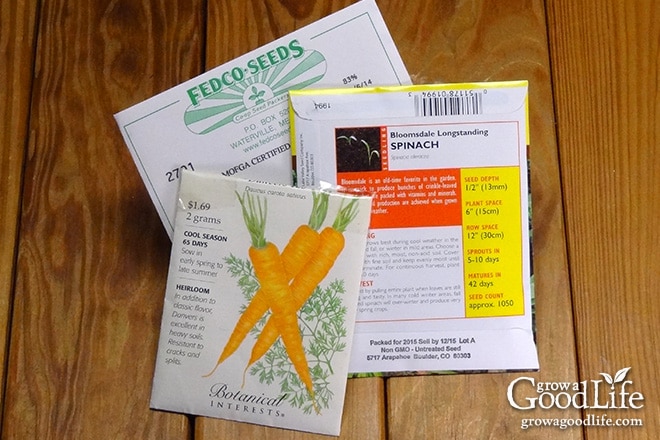
Seed packets list the number of days a crop usually needs to reach harvest size. This is called days to maturity. For fall planting, it helps to add an extra week or two to that number because crops grow more slowly as the days get shorter and in cooler temperatures.
For example, a radish variety listed at 25 days may still be a good choice close to frost because it grows quickly. But carrots, beets, and scallions need more time, so they should be sown earlier in the season.
Choose Baby Greens or Full-Size Crops
Many fall crops can be harvested young if there isn’t enough time for full-size plants. Lettuce, spinach, arugula, mustard greens, mizuna, tatsoi, and bok choy can all be harvested as baby greens. Beets and carrots can be harvested small, and turnip greens can be picked before the roots mature.
This makes fall planting more flexible. Even if a crop doesn’t reach full size before frost, you may still get a useful harvest of tender leaves, thinnings, or baby roots.
Know Which Crops Are Better Started Indoors
Not every fall vegetable is a good candidate for direct seeding, especially in short-season gardens. Crops that need a long time to mature, such as broccoli, cabbage, cauliflower, Brussels sprouts, collards, and full-size kale, are usually more reliable when started indoors and transplanted into the garden beds.
For those crops, see my companion guide on the best vegetables to start indoors for fall harvests. This direct-sowing guide focuses on seeds you can plant right in the garden.
When to Direct Sow Fall Garden Vegetables
The exact timing will depend on your climate, first frost date, and the varieties you choose. Use these windows as a general guide, and adjust based on your garden and seed packet information.
8 to 10 Weeks Before First Frost
This is the best window for slower direct-sown crops that need time to size up before cold weather settles in.
Good crops to direct sow 8 to 10 weeks before frost include:
- Carrots
- Beets
- Turnips
- Scallions or green onions
- Peas, if your season allows
Carrots, beets, and turnips are best sown directly because they grow from roots and don’t transplant easily. Planting them early gives them time to develop before growth slows in fall.
Peas can also be sown for a fall harvest, but I find them tricky in my short-season garden. Choose quick-maturing pea or pea pod varieties, keep the soil moist, and know that fall peas can be a bit of an experiment.
6 to 8 Weeks Before First Frost
This is the most useful window for many fall direct-sown crops. The soil is still warm, but cooler weather is on the way, making it a good time to plant leafy greens and quick-growing roots.
Good crops to direct sow 6 to 8 weeks before frost include:
- Lettuce
- Spinach
- Bok choy or pac choi
- Tatsoi
- Mizuna
- Mustard greens
- Arugula
- Baby beets
- Baby carrots
- Baby turnip
Leafy greens may need extra care if the weather is still hot. Lettuce and spinach, in particular, can be slow or uneven to germinate in warm soil. Keep the seedbed evenly moist and provide temporary shade if needed.
Root crops sown during this window may not always reach full size before frost, but they can still produce baby roots and tender greens.
4 to 6 Weeks Before First Frost
This later window is best for quick crops, baby greens, and small harvests from open spaces in the garden.
Good crops to direct sow 4 to 6 weeks before frost include:
- Radishes
- Arugula
- Baby lettuce
- Baby spinach
- Mustard greens
- Mizuna
- Tatsoi
- Baby bok choy
At this point in the season, focus on crops that grow quickly and can be harvested young. Radishes are one of the easiest choices because they mature fast and take up very little space.
Baby greens are also a good option because they don’t need as much time as full-size plants. A small patch of arugula, lettuce, mustard greens, or tatsoi can provide fresh harvests before hard frost arrives.
H3: After Light Frosts Begin
Once light frosts begin, it is usually too late to start most fall crops from seed in cold-climate gardens. Instead, focus on protecting established plants so they can keep growing.
Many cool-season crops can tolerate light frost once they are established, especially spinach, kale, mustard greens, turnips, radishes, green onions, and tatsoi. Row covers, low tunnels, or cold frames can help protect plants from frost and extend the harvest.
Tips for Direct Sowing Seeds in Late Summer
Direct sowing fall seeds is simple, but late-summer conditions can make germination a little more challenging than spring planting. The soil may be dry, the sun is still strong, and young seedlings can struggle if they dry out before they get established.
A little extra care at planting time can make a big difference.
Clear and Refresh the Garden Bed
Start by removing spent crops, weeds, and plant debris from the area you want to replant. If the soil has been growing crops all season, mix in a layer of finished compost to refresh the bed before sowing more seeds.
Rake the soil smooth, break up large clumps, and remove stones or sticks from the planting area. This is especially important for carrots and other root crops because compacted or rocky soil can interfere with root development.
If you harvested garlic earlier in the season, that empty bed can be a great place to tuck in a fall sowing of carrots, beets, lettuce, spinach, or greens. And once fall planting season arrives, you can also begin thinking ahead to next year’s garden by choosing a spot to plant garlic in the fall.
Water Before and After Sowing
Late-summer soil can be surprisingly dry, even after rain. Water the bed well before sowing seeds so the soil is evenly moist. After planting, water gently to avoid washing seeds away.
Keep the seedbed consistently moist until the seeds germinate. This is the most important step for successful fall direct sowing. Seeds that dry out after they begin to sprout may fail before you ever see them emerge.
A watering can with a fine rose, a gentle hose setting, or drip irrigation can help keep the soil moist without disturbing tiny seeds.
Provide Temporary Shade
Some fall crops are planted while the weather is still hot. Lettuce and spinach, especially, may germinate poorly in warm soil. Temporary shade can help keep the seedbed cooler and prevent the surface from drying out too quickly.
You can use shade cloth, lightweight row cover, burlap fabric, or even a board placed over the seeded row for a short time. If you use a solid cover, check daily and remove it as soon as seeds sprout so the seedlings can receive light.
Another option is to sow fall greens near taller crops that provide afternoon shade. Just be sure the seedlings still receive enough light once they begin growing.
Sow a Little Extra
Fall germination can be uneven because of heat, dry soil, heavy rain, pests, or changing weather. Sowing a few extra seeds can help make up for losses.
Once the seedlings are growing well, thin them to the spacing listed on the seed packet. Thinning gives the remaining plants room to grow. Many thinnings, such as lettuce, spinach, beet greens, radish greens, and turnip greens, can be used as baby greens if they are tender and clean.
Protect Young Seedlings
Young seedlings are tender and can be damaged by slugs, flea beetles, birds, and other late-season pests. Lightweight row cover can help protect newly seeded beds while the plants get established.
Check the bed often, especially after rain or during warm, humid weather when slugs may be active. Keeping weeds cleared away also helps reduce hiding places for pests and gives your seedlings more room to grow.
Keep Frost Protection Ready
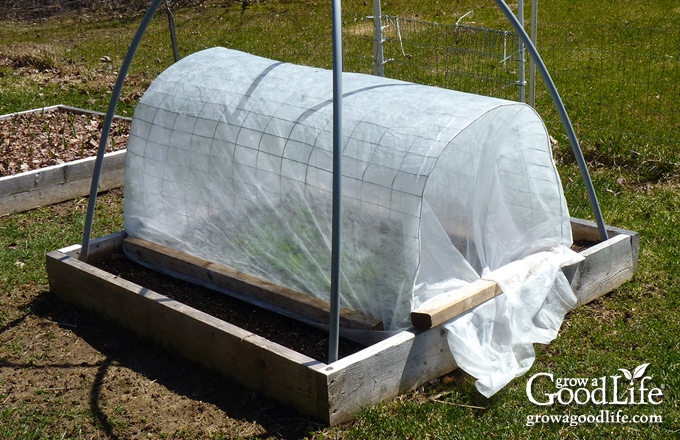
Fall weather can change quickly. One week may feel like summer, and the next can bring chilly nights. Keep row covers or other frost protection nearby so you can cover crops when cold weather threatens.
Established cool-season vegetables usually tolerate light frost better than young seedlings. Once plants are growing well, a simple layer of row cover can help them continue producing longer into the season.
For more ideas, see my guide on ways to protect plants from frost.
Best Fall Garden Vegetables to Direct Sow
These crops are good choices for fall direct sowing because they grow quickly, prefer cooler weather, or grow best when seeded right where they will mature.
Choose varieties with shorter days to maturity when possible, and adjust your planting dates based on your first frost date.
Radishes
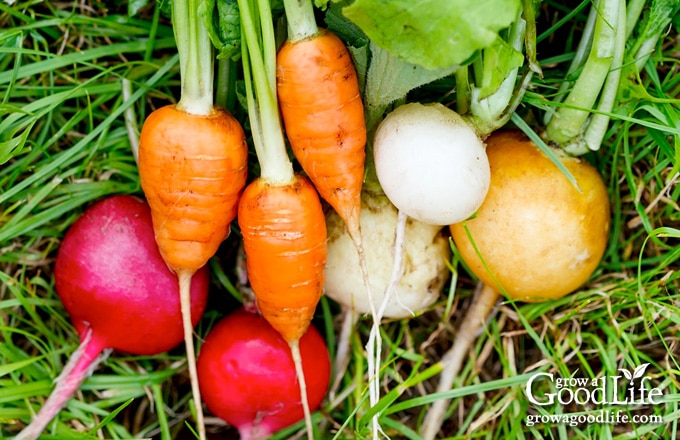
Radishes are one of the easiest vegetables to direct sow for a fall garden. They grow quickly, don’t need much space, and can be ready to harvest in just a few weeks, depending on the variety.
Sow radish seeds about 4 to 6 weeks before your first frost date. Plant small amounts every week or two for a steady harvest, as long as there is enough time left in the season.
Fall radishes often have better flavor than spring radishes because they mature in cooler weather. Harvest them while the roots are still young and tender. If left too long, they can become tough, woody, or too spicy.
For more growing tips, see my guide on how to grow radishes.
Arugula
Arugula is a quick-growing leafy green with a peppery flavor that fits well in a fall garden. It grows fast from seed and can be harvested young for salads or allowed to grow larger for cooked greens.
Sow arugula about 4 to 6 weeks before frost, or begin earlier and plant small successions for a longer harvest. Cooler fall weather helps slow bolting and gives the leaves a better flavor than arugula grown in summer heat.
Harvest baby leaves when they are a few inches tall, or cut the whole plant just above the soil line. If the weather stays mild, arugula may regrow for another small harvest.
Lettuce
Lettuce is a good fall crop to direct sow, especially leaf lettuce and baby greens. It grows best in cool weather and can be harvested as tender leaves before the plants reach full size.
Sow lettuce about 6 to 8 weeks before your first frost date. If the weather is still hot, choose a spot with afternoon shade or use shade cloth to help keep the soil cool and moist.
Lettuce seeds are small and need steady moisture to germinate well. Sow shallowly, water gently, and keep the seedbed from drying out. Once the plants begin growing, you can harvest outer leaves as needed or cut the plants for baby lettuce.
For more details, visit my guide on how to grow lettuce.
Spinach
Spinach is one of the best greens for fall because it prefers cool weather and can tolerate chilly temperatures once established. The challenge is getting the seeds to germinate during late-summer heat.
Sow spinach about 6 to 8 weeks before your first frost date. Keep the soil moist and provide temporary shade if the weather is hot. You can also try pre-sprouting the seeds or chilling them before planting if germination is a struggle in your garden.

Harvest spinach as baby leaves or allow the plants to grow larger if there is enough time. Established spinach can continue producing into cold weather with protection, and in some climates it may even overwinter under cover for an early spring harvest.
See my guide on how to grow spinach for more planting and harvest tips.
Mustard Greens
Mustard greens are fast-growing, flavorful, and well suited to fall weather. The leaves can be harvested young for a milder flavor or allowed to mature for more bite.
Sow mustard greens about 4 to 8 weeks before frost, depending on whether you want baby greens or larger leaves. They grow quickly from seed and are a good option for filling open spaces in the garden.
Cool weather helps improve the flavor, but mustard greens can still be spicy. Use baby leaves in salads, or cook larger leaves in soups, stir-fries, and sautés.
Mizuna
Mizuna is a quick-growing Asian green with tender, feathery leaves and a mild mustard flavor. It grows well in cool weather and is a useful crop for fall salads, stir-fries, and soups.
Sow mizuna about 4 to 8 weeks before your first frost date. Harvest baby leaves when they are small and tender, or let the plants grow larger for bigger harvests.
Mizuna is a good choice for repeated cuttings. Snip leaves above the growing point, and the plants may continue producing if the weather stays mild.
Tatsoi
Tatsoi is a cold-tolerant Asian green that grows well in fall. It forms spoon-shaped leaves that can be harvested as baby greens or allowed to grow into small rosettes.
Sow tatsoi about 4 to 8 weeks before frost. It can be harvested young if time is short, or grown longer for larger plants.
Tatsoi is a good candidate for season extension because established plants can handle cool weather. Protecting them with row cover can help stretch the harvest later into fall.
Bok Choy or Pac Choi
Bok choy, also called pac choi, is another good cool-season crop to direct sow. It can be harvested young as baby leaves or grown into small heads if there is enough time.
Sow bok choy about 6 to 8 weeks before your first frost date. Keep the soil evenly moist so the plants grow steadily. Heat stress and dry conditions can cause plants to struggle, so provide shade if the weather is still hot.
Harvest baby bok choy when the plants are small and tender, or cut mature plants at the base before hard frost damages them.
Turnips
Turnips are reliable fall crops because they grow quickly and provide both edible roots and greens. They are best when grown in cool weather and harvested while the roots are still small and tender.
Sow turnips about 6 to 8 weeks before your first frost date. Choose quick-maturing varieties for fall planting, especially if your season is short.
You can harvest turnip greens before the roots are ready, but don’t remove too many leaves from each plant if you want the roots to keep growing. Small turnips are usually sweeter and more tender than oversized roots.
Beets
Beets are a good fall crop when sown early enough. They take longer than radishes and many greens, but they are worth planting for both the roots and the leafy tops.
Sow beets about 8 to 10 weeks before frost for mature roots, or 6 to 8 weeks before frost for baby beets and greens. Beet seeds are actually clusters, so more than one seedling may sprout from each seed. Thin the seedlings so the roots have room to size up.
Beet greens can be harvested lightly as the plants grow, and small beets can be pulled before the ground freezes. Cooler weather often improves their sweetness.
For more growing tips, see my guide on how to grow beets.
Carrots
Carrots are best direct sown because they do not transplant well. Fall carrots can be especially delicious because cold weather helps sweeten the roots.
Sow carrots about 8 to 10 weeks before your first frost date. Choose short-season or baby carrot varieties if your growing season is limited.
Carrot seeds are slow to germinate, so keeping the seedbed moist is essential. After sowing, cover the row lightly with soil and water gently. You can lay a board, burlap, or row cover over the seeded area for moisture retention, but check daily and remove solid covers as soon as seeds sprout.
Thin carrots carefully once the seedlings are growing. Crowded carrots will be small or misshapen. Harvest when roots are large enough to use, or leave established carrots in the ground a little longer with mulch if your soil doesn’t freeze too quickly.
Visit my guide on how to grow carrots for more detailed planting tips.
Scallions or Green Onions
Scallions, also called green onions, are useful fall crops because they can be harvested young. They don’t need to form bulbs, so they can be planted for tender green stems and mild onion flavor.
Sow scallions or green onions about 6 to 8 weeks before frost. Keep the soil moist until the seeds germinate, and thin the plants if they are crowded.
Harvest green onions when they are large enough to use. Some varieties may survive into colder weather with protection, especially under row cover or mulch.
For more information, see my guide on how to grow green onions.
Also Worth Trying
These crops can also be direct sown for fall, but they are a little more dependent on timing, weather, and harvest goals.
Cilantro
Cilantro grows best in cool weather and often bolts quickly in spring and summer heat. Late summer sowings can provide a nice fall harvest once the weather begins to cool.
Direct sow cilantro in late summer, and keep the seedbed moist until germination. Plant small amounts every couple of weeks if you use a lot of cilantro and want a longer harvest.
Dill
Dill can be direct sown in late summer for fresh foliage, especially if there is enough time before frost. It may not have time to produce a large crop of flowers or seeds, but you can still harvest the leaves for cooking.
Sow dill in a sunny spot and keep the soil moist until the seeds sprout. Harvest small amounts as needed while the plants are young and tender.
Kale
Kale can be direct sown for baby leaves, but in short-season gardens, full-size fall kale is usually more reliable when started indoors and transplanted into the garden.
If you want to direct sow kale, plant it early enough to get established before cool weather slows growth. For baby kale, sow the seeds and harvest the leaves young.
Swiss Chard
Swiss chard can be direct sown for baby greens, but like kale, it usually performs better as a fall crop when started earlier indoors and transplanted.
If you have an open space and extra seed, you can sow Swiss chard for tender young leaves. Just know that it may not have time to grow into large plants before frost in short-season areas.
Peas
Fall peas are possible, but they can be tricky. Peas prefer cool weather, yet they need to be planted while the soil is still warm enough for seeds to germinate. In short-season gardens, there may not be enough time for a reliable harvest before frost.
If you want to try growing peas for fall, sow them about 8 to 10 weeks before your first frost date and choose quick-maturing varieties. Keep the soil moist during hot weather, and provide a trellis or support for climbing varieties.
What Not to Direct Sow for Fall in Short Seasons
Some vegetables need more time than a late-summer direct sowing can provide, especially in short-season gardens. These crops are usually better started indoors and transplanted outside once they have several weeks of growth behind them.
Crops that are usually better started indoors for fall include:
- Broccoli
- Cabbage
- Cauliflower
- Brussels sprouts
- Full-size kale
- Full-size Swiss chard
These crops can still be excellent choices for a fall garden, but they need a head start. Starting them indoors gives them time to develop strong roots before they are planted outside into the late-summer garden.
For help with these crops, see my companion article on the best vegetables to start indoors for fall harvests.
Fall Garden Vegetables: Direct Sowing Questions
Direct sowing seeds for a fall garden is simple, but the timing can feel a little different than spring planting. These common questions will help you decide what to plant, when to sow, and how to help your seeds germinate and grow as the season shifts from summer heat to cooler fall weather.
Keep Planting for a Longer Harvest
A fall garden doesn’t have to be complicated. Once summer crops begin to fade or empty spaces open up in the garden, choosing a few fall garden vegetables to direct sow can give you one more round of fresh harvests before winter.
Start by checking your average first frost date, then count backward to choose the right planting window. Sow slower crops like carrots, beets, turnips, and green onions earlier, and save quick crops like radishes, arugula, mustard greens, mizuna, tatsoi, and baby lettuce for later sowings.
Keep the seedbed moist, provide shade during hot weather, and have frost protection ready as the season cools. Even a small patch of fall greens or a short row of radishes can make the garden feel productive again as the growing season winds down.