
Ways to Preserve Onions: Storage, Freezing, Drying, Canning, and More
This post may contain affiliate links, which means that I may receive a commission if you make a purchase using these links. As an Amazon Associate I earn from qualifying purchases.
Have a big onion harvest? Learn how to preserve onions from the garden with easy methods for curing and storing, freezing, dehydrating, pickling, and using onions in safe canning recipes.

Onions are one of those crops I try to grow enough of each year because I use them in so many meals. They form the base of soups, stews, chili, roasts, skillet meals, sauces, and so many other recipes that I reach for all winter long.
Here in Maine, onion harvest season usually arrives as summer is beginning to shift toward late-season preserving. The tops start flopping over, the bulbs push up out of the soil, and suddenly there are onions curing on racks, onions waiting to be chopped, and onions that need to be used before they soften or sprout.
If you are wondering how to preserve onions from the garden, the good news is that you have several options. Storage onions can be cured and tucked away for winter, extra onions can be chopped and frozen for easy meal prep, and sliced onions can be dehydrated into flakes, minced onions, or onion powder for the pantry.
You can also preserve onions in tested canning recipes, such as pickled onions, relishes, salsas, sauces, soups, stews, beans, and meals in a jar where onions are part of the approved recipe.
This guide will walk you through the best ways to preserve onions so you can choose the method that fits your harvest, kitchen space, and the way you cook.
If you are still planning your garden, start with my guide on How to Grow Onions.
Choosing the right varieties and growing healthy bulbs will give you a better harvest to store and preserve later.
Before You Preserve Onions
Before deciding how to preserve your onions, take a few minutes to sort through the harvest.
Set aside firm, mature storage onions with dry skins and tight necks for curing and long-term storage. These are the onions most likely to keep well through the winter when stored in a cool, dry, dark, well-ventilated place.

Use any onions with thick necks, bruises, soft spots, sunscald, or damage first. These won’t store as long, but they are perfect candidates for freezing, dehydrating, or using in a recipe right away.
Sweet onions and mild onions usually don’t store as long as stronger storage varieties, so plan to use or preserve those earlier in the season.
If you grow several varieties, it helps to separate them by type. I like to grow storage onions such as Patterson, Cortland, Rossa Di Milano, and Redwing because they hold up well for winter cooking when harvested, cured, and stored properly.
Cure and Store Whole Onions
The easiest way to preserve storage onions is to cure them properly and store them whole. This is the method I rely on most for long-term storage because cured onions can be used fresh from the pantry for months.
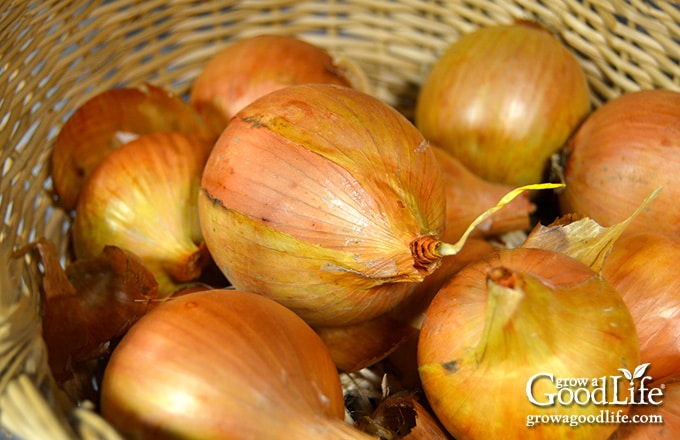
Curing gives the outer skins time to dry and helps the necks tighten so the onions are less likely to rot in storage. Once cured, the onions can be stored in cool, well-ventilated area in mesh bags, crates, baskets, or other containers that allow plenty of airflow.
This method is best for firm, mature storage onions that have been harvested at the right time and cured fully before storage.
Storage onions are perfect for everyday cooking. Use them in soups, stews, roasts, chili, sauces, bone broth, baked beans, and skillet meals.
- Best for: Storage onions, winter cooking, soups, stews, roasts, chili, and everyday meals.
- Avoid using: Damaged onions, onions with thick necks, soft bulbs, or sweet onions that don’t store well.
- Learn more: How to Harvest, Cure, and Store Onions from the Garden
Freeze Chopped or Sliced Onions
Freezing onions is one of the easiest ways to preserve extra onions, especially if you want quick meal prep later. Frozen onions soften once thawed, so they are best used in cooked recipes rather than fresh salads or sandwiches.

You can peel and dice onions for soups, chili, casseroles, sauces, and skillet meals, or slice them for fajitas, stir fry, and roasted vegetables. The pieces can be packed directly into freezer bags, or spread on a parchment-lined baking sheet and flash frozen first so they stay loose in the bag.
Freezing is especially helpful for onions that won’t store well, onions you have already cut into, or a large harvest that you want to prep before it starts sprouting.
I often freeze leftover onion when I only need part of one for a recipe. Instead of wrapping the rest and hoping I remember it in the refrigerator, I chop the remaining onion and add it to a freezer bag. Later, I can scoop out what I need and add it straight to a hot skillet, soup pot, or slow cooker.
Frozen onions are convenient, but they do have a stronger aroma in the freezer. Use good-quality freezer bags, press out as much air as possible, and double-bag if needed to help contain the smell.
- Best for: Cooked recipes, quick meal prep, soups, stews, chili, fajitas, casseroles, skillet meals, and sauces.
- Texture note: Frozen onions will be softer than fresh onions once thawed.
- Learn more: How to Freeze Onions
Dehydrate Onions for Pantry Storage
Dehydrating onions using a food dehydrator is a great way to preserve a large amount of onions in a small amount of space. Once dried, onions can be stored as slices, crushed into flakes, minced into smaller pieces, or ground into onion powder.

Dried onions are useful for soups, stews, casseroles, seasoning blends, dry mixes, homemade broth powder, and pantry meals. They also rehydrate well when added to recipes with liquid.
You can use dehydrated onions in several ways:
- Add dried onion flakes directly to soups, stews, chili, and sauces.
- Rehydrate minced onions before adding them to meatloaf, burgers, dips, or casseroles.
- Grind fully dried onions into onion powder for seasoning blends.
- Add dried onions to homemade soup mixes, dry rubs, and pantry meal kits.
Because onions have a strong smell while drying, it is best to dehydrate them by themselves rather than drying them with fruit, herbs, or other mild-flavored foods.
The onion aroma can carry through the house, but once the onions are fully dried and sealed in jars, they are one of the most useful pantry ingredients you can make.
- Best for: Long-term pantry storage, seasoning blends, soups, stews, sauces, casseroles, and dry mixes.
- Storage note: Dry onions completely before storing, and check jars for moisture during the first several days.
- Learn more: How to Dehydrate Onions for Food Storage
Pickle Onions
Pickling is one of the tastiest ways to preserve onions, especially if you enjoy adding bright, tangy flavor to sandwiches, burgers, tacos, salads, grain bowls, charcuterie boards, and roasted meats.
Quick pickled onions are stored in the refrigerator and are great for small batches. They are easy to make with sliced onions, vinegar, salt, sugar, and seasonings, and they are ready to enjoy after a short time in the brine.
For shelf-stable jars, always use a tested canning recipe with the correct vinegar strength, ingredient amounts, jar size, and processing time. Pickled onions that are processed properly can be stored in the pantry and enjoyed later in the year.

Pickled onions can be made with red onions, white onions, yellow onions, sweet onions, or pearl onions, depending on the recipe. Red onions are especially popular for quick pickles because they turn a beautiful pink color in the brine, while yellow and sweet onions work well in bread and butter style recipes.
- Best for: Sandwiches, burgers, tacos, salads, grilled meats, roasted vegetables, and snack boards.
- Safety note: Use tested canning recipes for shelf-stable pickled onions. Refrigerator pickled onions are not shelf stable.
Try these recipes:
Preserve Onions in Tested Canning Recipes
Onions are a low-acid vegetable, so they need to be handled carefully in home canning. Plain onions cannot be safely canned in a water bath canner, and you should not add extra onions to a recipe unless a tested recipe says it is safe to do so.
That said, onions are included in many safe, tested canning recipes. They add flavor to pickles, relishes, salsas, sauces, soups, stews, beans, and meals in a jar when used in the amounts specified by the recipe.
This can be one of the most practical ways to preserve onions from the garden. Not necessarily as jars of plain onions, but as part of recipes you will use throughout the year.
Water Bath Canning Recipes with Onions
Water bath canning is used for high-acid foods, including many pickles, relishes, salsas, and tomato-based recipes that have been properly acidified. Onions are often included in these recipes for flavor, but the amount matters, so always follow the tested recipe.
Good examples include:
- Bread and Butter Pickles
- Sweet Zucchini Relish
- New England Piccalilli Relish
- Zesty Salsa Recipe for Canning
- Roasted Tomatillo Salsa Verde Canning Recipe
- Seasoned Tomato Sauce Recipe
Pressure Canning Recipes with Onions
Pressure canning is used for low-acid foods, including vegetables, beans, soups, stews, meats, poultry, and meals in a jar. Since onions are low-acid, they are often included in pressure-canned recipes along with other vegetables, beans, meat, broth, or sauce.
Good examples include:
- Pressure Canning Stewed Tomatoes and Vegetables
- Chicken Soup Pressure Canning Recipe
- Beef Stew Canning Recipe
- Boston Baked Beans Canning Recipe
- Chicken Chili Verde Canning Recipe
These recipes are a great way to turn onions from the garden into shelf-stable meals and pantry staples. Just remember to follow the tested recipe as written, including the vegetable amounts, jar size, headspace, processing method, and processing time.
Best Ways to Preserve Onions by Use
The best way to preserve onions depends on how you plan to use them later.
- If you want onions for everyday cooking, cure and store your best storage onions whole.
- If you want quick meal prep, freeze diced or sliced onions in recipe-sized portions.
- If you want shelf-stable pantry storage, dehydrate onions into flakes, minced onions, or powder.
- If you want a tangy condiment, make refrigerator pickled onions or use a tested canning recipe for shelf-stable pickled onions.
- If you want ready-to-use pantry meals, preserve onions as part of tested canning recipes such as relishes, salsas, soups, sauces, baked beans, stews, or meals in a jar.
Tips for Preserving an Abundant Onion Harvest
Preserve the onions that won’t store well first. Any onions with bruises, thick necks, soft spots, or damage should be used, frozen, dehydrated, or cooked into a recipe before they spoil.
- Keep the best storage onions whole: Firm, fully cured onions with tight necks and papery skins are the best candidates for long-term storage.
- Label everything: Frozen and dehydrated onions can look similar after a few months in storage, so label bags and jars with the date and type of onion.
- Preserve onions in the form you use most: Dice them if you cook a lot of soups and chili, slice them if you make fajitas and stir-fries, and dehydrate them if you like shelf-stable pantry ingredients.
- Don’t waste partial onions: If you only use half an onion in a recipe, chop the rest and add it to a freezer bag for later.
- Check stored onions regularly: Remove any bulbs that are softening, sprouting, or showing signs of spoilage so they don’t affect the rest of the crop.
- Use sweet onions first: Sweet and mild onions usually don’t store as long as storage varieties, so plan to enjoy or preserve those earlier.

Frequently Asked Questions About Preserving Onions
If you still have questions about preserving onions, these tips will help you decide which method to use and how to store your harvest safely. Whether you are curing onions for winter, freezing chopped onions for quick meals, dehydrating them for the pantry, or using them in tested canning recipes, the answers below will help you make the most of your onion harvest.
Keep the Onion Harvest Going
A good onion harvest can carry you through many months of home cooking when you preserve it in a few different ways. Store the best bulbs whole for winter, freeze chopped onions for easy meals, dehydrate some for the pantry, and use tested recipes when you want shelf-stable pickled onions, relishes, sauces, soups, beans, or meals in a jar.
With a little planning, those baskets of onions from the garden can become one of the most useful ingredients in your pantry, freezer, and winter kitchen.
Want to grow more onions for next year’s pantry? Start with How to Grow Onions, then learn How to Harvest, Cure, and Store Onions so your crop lasts as long as possible.
