
Edible Weeds in Your Garden: 8 Common Weeds You Can Eat
This post may contain affiliate links, which means that I may receive a commission if you make a purchase using these links. As an Amazon Associate I earn from qualifying purchases.
Learn how to identify common edible weeds in your garden, harvest them safely, and use plants like purslane, dandelion, chickweed, violets, and more.

Have you ever looked down while weeding the garden and wondered if some of the plants you are pulling might actually be useful?
Most of us are quick to call anything growing in the wrong place a weed. And in the vegetable garden, that is often true. Weeds compete with crops for moisture, nutrients, light, and space, and they can quickly take over if we ignore them for too long.
But some common garden weeds are also edible. Once you learn to recognize them, you may start seeing a few of these plants a little differently. Instead of tossing every weed into the compost pile, you can harvest small amounts from clean, unsprayed areas and use them as fresh greens, edible flowers, or tangy garnishes.
This article is not about foraging along roadsides or harvesting mystery plants from unknown places. It is about edible weeds you may already find growing in your own garden beds, paths, and backyard, the places where you know what has been sprayed, added, or avoided.
You still need to identify each plant correctly, harvest safely, and keep weeds from taking over your vegetable garden. But learning which weeds are edible can help you make better use of what is already growing around you.
Before You Eat Any Garden Weed
Before eating any weed from the garden, make sure you can positively identify it. Many edible plants have look-alikes, and some plants are not safe to eat. If you are not completely sure what a plant is, do not eat it.
Also, only harvest edible weeds from clean areas you know have not been sprayed with herbicides, pesticides, or other chemicals. Avoid harvesting from roadsides, driveways, treated lawns, pet areas, and any soil that may be contaminated.
For the safest harvest:
- Identify the plant with confidence before eating it.
- Harvest only from clean, unsprayed areas.
- Avoid areas exposed to herbicide drift.
- Do not harvest from roadsides, parking areas, or treated lawns.
- Skip areas where pets may have been.
- Wash weeds well before using.
- Try a small amount first when eating a new-to-you plant.
- Use stronger-flavored or higher-oxalate greens in moderation.
Your own vegetable garden is often the best place to start because you know how the area has been managed. If you garden organically and recognize the plant, you may be able to harvest a small amount from garden paths, bed edges, or areas where the weeds are not competing with crops.
Why Eat Edible Weeds?
Eating weeds may sound strange at first, but many edible weeds are simply plants that happen to be growing where we did not plant them.
Some offer tender greens in early spring. Others provide crisp summer growth, edible flowers, or bright tangy flavor. They can add variety to salads, sandwiches, eggs, soups, and cooked greens without planting anything extra.
Of course, wild plants are still weeds when they crowd your vegetables, steal moisture, or drop seeds all over the garden. You don’t have to let them take over. The idea is to harvest what you can use safely, then manage the rest before they become a bigger problem.
Learning to recognize edible weeds can also make you more observant in the garden. You begin to notice where certain weeds grow, what conditions they seem to prefer, and how quickly they spread. If you are curious about what weeds may reveal about your growing space, see my article on what garden weeds can tell you about your soil.
8 Common Edible Weeds You May Find in the Garden
The following edible weeds are commonly found in lawns, garden paths, vegetable beds, and disturbed soil. Some are best used as tender salad greens, while others are better cooked or used in small amounts as flowers or garnishes.
As always, harvest only from clean areas and eat only plants you can positively identify.
Purslane
Common purslane (Portulaca oleracea) is one of my favorite examples of a weed that can be both useful and annoying. It creeps low along the soil, especially in warm weather, and often appears in garden paths, raised beds, and bare patches of ground.

Purslane has thick, succulent leaves and smooth reddish stems. The leaves have a crisp, juicy texture and a mild tangy flavor that works well in salads, sandwiches, eggs, and stir-fries.
Harvest the young, tender tips from clean garden areas before the plant begins setting seed. I like to pull purslane where it competes with vegetables, then save the tender leaves and stems for the kitchen.
Use purslane:
- Tossed into green salads.
- Added to sandwiches or wraps.
- Stirred into scrambled eggs or omelets.
- Added to stir-fries near the end of cooking.
- Sprinkled over tacos, grain bowls, or potato salad.
Purslane can spread quickly and may re-root if pulled stems are left on moist soil, so don’t let it get away from you. Harvest what you want, then remove the rest before it sets seed.
For more details, see my full guide on how to identify and use purslane weed.
Dandelion
Dandelions (Taraxacum officinale) are one of the most recognizable edible weeds. The leaves, flowers, and roots are all used in different ways, but for garden meals, the dandelion greens and bright yellow flowers are the easiest place to start.

Young dandelion leaves are the most tender and least bitter. They can be mixed into salads with milder greens or sautéed like other leafy greens. Older leaves tend to have a stronger flavor and are usually better cooked.
The flowers are edible too and can be used for infusions, garnishes, and recipes such as dandelion jelly. If you have a clean, unsprayed patch of dandelions, the flowers can be a cheerful spring ingredient.
Use dandelion:
- Young leaves in mixed salads.
- Leaves sautéed with garlic and olive oil.
- Flowers as a garnish.
- Flowers for jelly, vinegar, or tea.
Avoid harvesting dandelions from treated lawns or public areas where herbicides may have been used. If you want to use the flowers in the kitchen, harvest fresh blooms from a clean area and use them soon after picking.
You can also see my low-sugar dandelion jelly recipe for a safe canning project using dandelion flowers.
Lamb’s Quarters
Lamb’s quarters (Chenopodium album) is a common garden weed that often appears in rich, disturbed soil. It can grow quickly in vegetable beds and along garden edges, especially where soil has been cultivated.

The young leaves are tender and mild, with a flavor often compared to spinach. Larger leaves can be cooked like spinach or other greens. Because lamb’s quarters can grow tall and produce plenty of seeds, it is best to harvest or remove it while the plants are still young.
Look for young shoots with soft green leaves that may have a slightly dusty or powdery appearance, especially on the newest growth. Harvest the tender tops before the stems become tough.
Use lamb’s quarters:
- Cooked like spinach.
- Added to soups.
- Stirred into egg dishes.
- Sautéed with garlic.
- Mixed with other cooked greens.
Like spinach, lamb’s quarters contains oxalates, so enjoy it in moderation, especially if you are sensitive to oxalates or prone to kidney stones. Cooking the leaves is usually the best way to use them.
Chickweed
Chickweed (Stellaria media) is a tender cool-season weed that often appears in spring and fall. It grows low to the ground in soft mats and has small leaves, delicate stems, and tiny white star-like flowers.

Chickweed has a mild, fresh flavor that works well in salads and sandwiches. It is one of the easier edible weeds to use raw because the leaves and stems are tender when young.
Harvest chickweed while it is lush and green, before it becomes stringy or begins drying out. Since it grows close to the soil, rinse it well to remove dirt or grit.
Use chickweed:
- Tossed into salads.
- Added to sandwiches and wraps.
- Blended into green sauces.
- Stirred into soups at the end of cooking.
- Used as a mild garnish.
Chickweed can spread quickly, especially in cool weather, but it is usually easy to pull because the roots are shallow. Harvest what you want, then remove the rest before it drops seed.
Wild Violets
Wild violets (Viola sororia) are cheerful little plants with heart-shaped leaves and purple, blue, or white flowers in spring. They often appear in lawns, garden edges, and partially shaded areas.
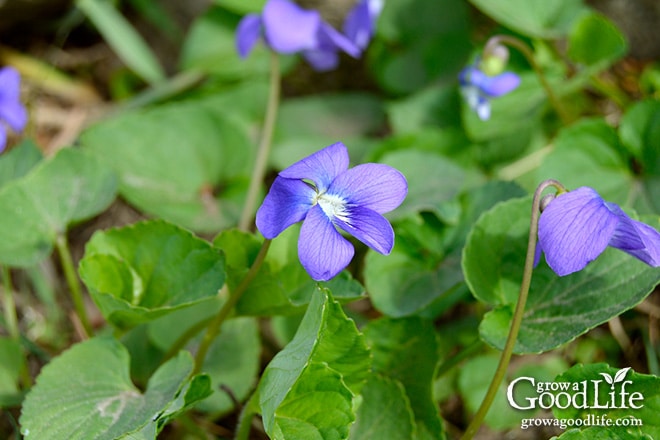
Both the flowers and young leaves of true violets are edible. The flowers are the easiest and most appealing part to use because they add color to salads, desserts, drinks, vinegar, and ice cubes. Young leaves can also be used in small amounts in salads or cooked with other greens.
Use wild violets:
- Flowers sprinkled over salads.
- Flowers infused into vinegar.
- Flowers frozen into ice cubes.
- Flowers used as a garnish for desserts.
- Young leaves added sparingly to salads or cooked greens.
Be sure you are harvesting true wild violets from a clean area. Avoid eating houseplants or ornamental plants, or any plant that may have been treated with chemicals.
If you have a patch of wild violets in spring, you may enjoy my wild violet vinegar recipe. It is a simple infusion that captures the color and gentle taste of violet blossoms.
Plantain
Plantain (Plantago major) is a common lawn and garden weed, not the banana-like fruit. You may see broadleaf plantain with wide oval leaves, or narrowleaf plantain with long slender leaves. Both often grow in lawns, paths, and compacted areas.

The young, tender leaves are the best for eating. Mature leaves can become tough and stringy, especially the veins, so larger leaves are usually better chopped and cooked.
Plantain has a mild green flavor. It is not as exciting as purslane or chickweed for fresh eating, but it can be useful when harvested young.
Use plantain:
- Young leaves in small amounts in salads.
- Chopped leaves cooked in soups.
- Leaves sautéed with other greens.
- Young leaves added to egg dishes.
Because plantain often grows in lawns and walkways, be extra careful about where you harvest. Avoid treated lawns, paths with heavy foot traffic, pet areas, and compacted spots where runoff or contamination may be a concern.
Yellow Wood Sorrel
Yellow wood sorrel (Oxalis stricta) is a low-growing weed with three heart-shaped leaflets and small yellow flowers. It is sometimes mistaken for clover, but the leaves have a bright, tangy, lemony flavor.

This is not a green I would eat by the handful. Yellow wood sorrel is best used as a small garnish or tart accent. A few leaves can add a fresh sour note to salads, sandwiches, soups, and tacos.
Use yellow wood sorrel:
- Sparingly in salads.
- As a tangy garnish.
- Sprinkled over soups.
- Added to sandwiches or wraps.
- Used like a lemony accent with other greens.
Yellow wood sorrel contains oxalic acid, so use it in small amounts and avoid it if you are sensitive to oxalates, prone to kidney stones, or have been advised to limit high-oxalate foods.
It can also spread by seed, so pull plants before the seed pods mature if you want to reduce it in the garden.
Red Clover
Red clover (Trifolium pratense) is a familiar plant with pinkish-purple flower heads and three-part leaves, often marked with pale chevrons. It is common in lawns, fields, garden edges, and grassy paths.

The flowers are the most useful part for this article. Fresh red clover blossoms can be used sparingly as an edible garnish, and clean blossoms can also be dried for tea. Young leaves are edible too, but they are not as tender or easy to use as chickweed, purslane, or dandelion leaves.
Use red clover:
- Flowers as a salad garnish.
- Flowers dried for tea.
- Blossoms sprinkled over summer dishes.
- Young leaves cooked with other greens.
Harvest only fresh, clean blossoms that are not brown, wilted, or growing in treated lawns. Use red clover in small amounts as a garnish or tea ingredient, not as a main salad green.
Because red clover contains plant compounds that may not be appropriate for everyone. If you are pregnant, nursing, taking medications, or have health concerns, check with a healthcare provider before using red clover regularly.
Simple Ways to Use Edible Weeds
You don’t need complicated recipes to start using edible weeds from the garden. The easiest way is to add small amounts to meals you already make.
Try these simple ideas:
- Add purslane or chickweed to a green salad.
- Mix young dandelion leaves with lettuce or spinach.
- Sauté lamb’s quarters with garlic and olive oil.
- Add purslane to scrambled eggs or omelets.
- Sprinkle violet flowers over salads or desserts.
- Use yellow wood sorrel as a tangy garnish.
- Add young plantain leaves to soups or cooked greens.
- Use red clover blossoms as a small edible garnish.
- Blend mild greens into pesto or herb sauce.
- Stir tender greens into soup just before serving.
Start small. Edible weeds can have stronger flavors than cultivated greens, and some are best used as accents rather than main ingredients.
When to Pull Edible Weeds Anyway
Just because a weed is edible doesn’t mean you should let it grow wherever it wants.
Edible weeds can still compete with vegetables for water, nutrients, light, and space. They can crowd seedlings, reduce airflow, and set seed before you realize it. Some, like purslane and chickweed, can spread quickly when conditions are right.
Pull edible weeds when they are:
- Crowding vegetable seedlings.
- Growing too close to crops.
- Blocking airflow.
- Spreading through newly planted beds.
- Producing flowers or seed pods.
- Growing in areas where you don’t want them.
A good approach is to harvest what you can use safely, then remove the rest before the plants go to seed. This lets you enjoy the useful parts without allowing weeds to take over the garden.
If weeds are a constant problem, see my tips for natural weed control in the garden.
Frequently Asked Questions About Edible Weeds
Eating weeds from the garden can feel strange at first, but once you learn to recognize a few common edible plants, it becomes another way to make use of what is already growing. Here are some common questions gardeners have before adding edible weeds to their meals.
A Fresh Look at Garden Weeds
Weeds will always be part of gardening. They show up in paths, creep along bed edges, and appear in bare soil just when the garden is getting busy.
But not every weed has to go straight to the compost pile. Some edible weeds can become useful additions to simple meals when they are properly identified and harvested from clean, unsprayed areas.
You don’t have to let them take over. Pull what competes with your vegetables, harvest a little of what you can use, and keep managing the rest. Once you recognize a few common edible weeds, you may find that your garden has been offering more than you realized.
Resources and Further Reading: The following Extension resources were helpful for plant identification, edible use, and safety considerations while writing this article:
- University of Maine Cooperative Extension: Facts on Edible Wild Greens in Maine
- Wisconsin Horticulture: Common Purslane, Portulaca oleracea
- Wisconsin Horticulture: Yellow Woodsorrel, Oxalis stricta
- NC State Extension Plant Toolbox: Chickweed, Stellaria media
- NC State Extension Plant Toolbox: Broadleaf Plantain, Plantago major
- NC State Extension Plant Toolbox: Common Blue Violet, Viola sororia
- NC State Extension Plant Toolbox: Red Clover, Trifolium pratense

Thank you for sharing this article. it is very interesting.
Maria, Thank you. I’m glad you found it interesting!