
Pickled Jalapenos Canning Recipe
This post may contain affiliate links, which means that I may receive a commission if you make a purchase using these links. As an Amazon Associate I earn from qualifying purchases.
Preserve fresh peppers with this pickled jalapeños canning recipe. Packed in a tangy vinegar brine and processed in a water bath canner for safe, shelf-stable jars.

If your garden is overflowing with jalapeño peppers, this easy pickled jalapeños recipe for canning is a great way to preserve them into shelf-stable jars. These sliced jalapeños are hot and spicy with a tangy vinegar kick, perfect for adding bold flavor to your favorite meals.
I can’t resist growing lots of jalapeño peppers each year. They’re easy to grow and produce an abundant harvest. I use them in many canning recipes, including tomato jalapeno salsa, salsa verde, and roasted green chile enchilada sauce. I also freeze plenty of peppers for fajitas, chili, and other winter meals.
Canning pickled jalapeños is one of my favorite ways to preserve the harvest. Once processed, the jars are shelf stable and ready whenever you need a little heat. Add them to nachos, taco salads, sandwiches, or deviled eggs, and don’t forget: the flavorful brine can be used in dressings, marinades, or drizzled over roasted vegetables.
Ingredient Overview for Pickled Jalapeños
This simple pickled jalapeños canning recipe uses just a few ingredients, each playing an important role in flavor and safe preservation.
Jalapeño Peppers
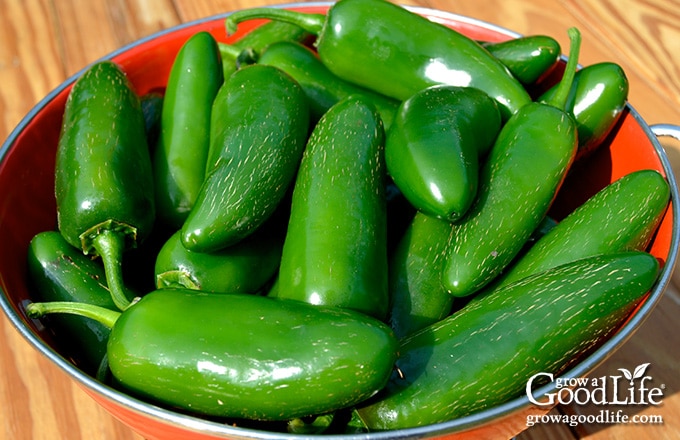
Start with fresh, firm jalapeño peppers for the best quality. Look for peppers with smooth, glossy skin and no soft spots or blemishes. Both green and red jalapeños work well in this recipe.
Green jalapeños are slightly milder with a bright, grassy flavor, while red jalapeños are more mature, a bit sweeter, and often spicier. You can use either, or a mix of both, for colorful jars and a range of heat levels.
As with all pickled produce, preserving within a day or so after harvesting will give you a higher quality product.
Vinegar (5% Acidity)
Vinegar is essential for safely canning pickled peppers. Always use a commercial vinegar labeled with 5% acidity, such as white distilled vinegar or apple cider vinegar.
White vinegar produces a sharper, more traditional pickle flavor, while apple cider vinegar adds a slightly fruity note and a darker color. Both are safe options, as long as the acidity level remains the same.
Water
Water is added to balance the flavor of the vinegar, but the ratio is important for safety. This recipe uses a tested proportion of vinegar to water to ensure the proper acidity for water bath canning.
Do not increase the amount of water or reduce the vinegar, as this can make the recipe unsafe for shelf-stable storage.
Garlic
Garlic is used to lightly flavor the pickling brine. In this recipe, garlic cloves are crushed, simmered in the brine, and then removed before filling the jars, creating a subtle garlic background without overpowering the peppers.
Safe Changes for This Pickled Jalapeños Recipe
This recipe is based on a tested canning formula, so it’s important to follow the ingredient ratios and processing instructions as written. However, there are a few safe ways to adjust the flavor to suit your taste.
Safe Adjustments for Flavor
These changes will not affect the safety of the recipe when used in small amounts:
- Pepper Varieties: You may substitute other peppers (such as serrano or banana peppers) as long as you keep the total weight of peppers the same.
- Salt: This recipe does not include salt because it is not in the original recipe. However, you may add a small amount of pickling or canning salt to each jar for flavor if desired.
- Sugar or Honey: A small amount of sugar or honey can be added to the brine to balance the heat. This won’t make the peppers less spicy, but it can mellow the overall flavor.
- Dried Spices: You can add small amounts of dried pickling spices, such as cumin seeds, oregano, or black peppercorns, to each jar for additional flavor.
Jar Size Options
This recipe has been adapted for half-pint jars, but it is also safe to use pint jars, which is the size used in the original Ball Blue Book recipe.
- You may use half-pint or pint jars for this recipe.
- The processing time remains the same for both sizes.
Using smaller jars (such as 4-ounce jars) is also fine, as long as you maintain the proper headspace and process for the full recommended time. Quart jars are not included in the original tested version.
Changes That Are Not Safe
To keep this recipe safe for water bath canning, avoid the following:
- Do not reduce the amount of vinegar or increase the water.
- Do not add low-acid vegetables (such as onions, carrots, or peppers beyond the tested amount).
- Do not skip the boiling hot water bath canning process for shelf stable jars.
For more details on what can and cannot be safely adjusted, see my guide: How to Modify Pickle and Relish Canning Recipes Safely.
Steps for Canning Pickled Jalapeños
Canning pickled jalapeños is a simple way to preserve your harvest. The peppers are sliced, packed into jars, covered with a hot vinegar brine, and processed in a water bath canner for safe, shelf-stable storage.
This recipe is based on the “Hot Peppers” recipe from the Ball Blue Book Guide to Preserving. It has been adjusted for a small batch of 5 half-pint jars. The proportions of ingredients remain the same for safe canning.
If you’re new to canning, be sure to review my Water Bath Canning for Beginners guide before you get started.
If you like having a quick reference while you work, my free Home Canning Checklist can help. It includes helpful reminders, preparation steps, and a place to record your batches. Get it here:

Grab your Free copy
Home Canning Checklists
A more detailed and printable recipe can be found at the bottom of this article, but these are the general steps for making and canning pickled jalapeño slices:
Step 1: Prepare the Canning Equipment
Gather your canning and kitchen equipment. You will need:
- Water bath canner and canning rack
- 5 half-pint canning jars
- Canning lids and bands (new lids for each jar, bands can be reused)
- Canning tools: jar lifter, funnel, and bubble popper
- Canning ladle
- Kitchen scale
- Food prep gloves
- Plus basic kitchen supplies such as a large saucepot, large prep bowl, small pot, kitchen towels, knife, and a cutting board.
Wash the canning jars, lids, and canning tools in warm, soapy water and rinse well. Inspect the jars carefully, and don’t use any that have cracks or chips, as these may break when heated.
Jars must be heated before filling to prevent breakage due to thermal shock. Place the jar rack into the water bath canner, set the jars upright in the canner, and add enough water to cover the jars. Bring the canner to a simmer (180˚F) for 10 minutes, and keep the jars hot until you are ready to fill them.
Step 2: Prepare the Hot Peppers
Weigh the peppers, and wash well under clean running water. Air dry on a clean kitchen towel.
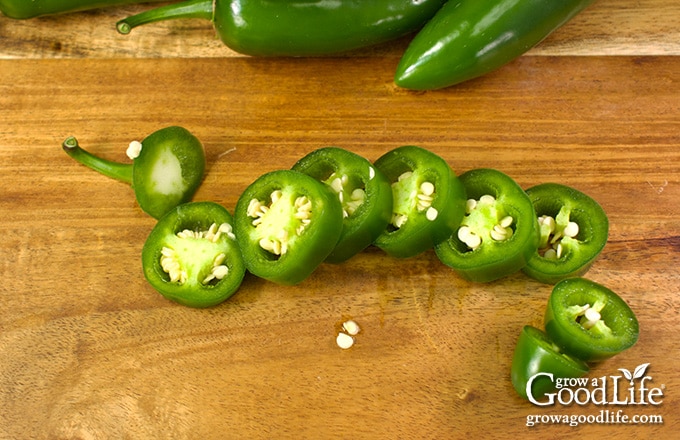
Slip on the gloves to protect your skin from irritation. Then, remove the stems and cut the peppers into 1-inch slices or rings. Set aside.
Step 3: Make the Pickling Brine
Combine the vinegar, water, and crushed garlic in a large saucepot. Bring to a boil, reduce the heat, and simmer (180˚F) for 5 minutes. Remove and discard the garlic. Then fill your jars.

Step 4: Fill the Jars
Lay a dry kitchen towel on the counter. Remove a hot jar from the canner, drain, and place on the towel. Keep the remaining jars in the canner, so they stay warm.
Use a pair of tongs or wear gloves, and add the jalapeño slices to the warm jars. Ladle hot pickling liquid over the peppers.

Run a bubble popper through the jar to release air bubbles. Wipe the rim with a damp towel to remove residue. Center a lid on the jar, and screw the band on until fingertip tight. Place the jar back into the canner, and repeat with the rest of the jars.
What If You Run Out of Pickling Brine? If you run low on brine while filling your jars, make more using the same ratio:
- 1 1/2 cups vinegar (5% acidity)
- 1/2 cup water
Bring to a simmer and use to top off the jars, maintaining 1/2-inch headspace.
Step 5: Process in a Water Bath Canner
Once all the jars are filled and returned to the canner, make sure the water level covers the jars by at least 2 inches. Cover the pot and bring the water to a full rolling boil.
When the water is boiling steadily, start your timer and process the jars for the time listed in the recipe below, adjusting as needed for your altitude.
Step 6: Cool and Store
When the processing time is complete, turn off the heat and carefully remove the lid, tilting it away from you to avoid steam. Let the canner rest for about 5 minutes before removing the jars.
Place a dry kitchen towel on the counter. Using a jar lifter, carefully lift the jars straight up and set them on the towel, leaving space between each jar. Keep the jars upright and avoid adjusting the lids or bands at this stage.
Allow the jars to cool undisturbed for 12 to 24 hours. After they have cooled for at least 12 hours, check the seals by pressing the center of each lid. The lid should not flex or pop.
Once sealed, wash the jars to remove any residue, label, date, and store them in a cool, dark location. Use within 12 to 18 months for the best quality and flavor.
You can enjoy your pickled jalapeños right away, but the flavor improves as they sit. For the best balance of heat and tang, let the jars rest for 3 to 4 weeks before opening.

Ways to Enjoy Pickled Jalapeños
Homemade pickled jalapeños add a bright, spicy kick to all kinds of dishes. Here are a few easy ways to use them:
- Pile onto nachos, quesadillas, and tacos for extra heat and tang.
- Add to sandwiches and burgers for a bold crunch.
- Chop into deviled eggs or potato salad for a spicy twist.
- Stir into salsas and dips for extra flavor.
- Top pizzas or flatbreads with a few jalapeno slices before baking.
- Use the brine in salad dressings, marinades, or to season roasted vegetables.
Frequently Asked Questions
Here are answers to some of the most common questions I have received over the years about canning pickled jalapeños.
Pickled Jalapeños (Water Bath Canning Recipe)
Ingredients
- 1 1/2 pounds jalapeño peppers
- 3 cups white vinegar or apple cider vinegar 5%
- 1 cup water
- 2 cloves garlic crushed
Instructions
Prepare the Canning Equipment:
- Wash your jars, lids, screw bands, and canning tools in hot, soapy water. Rinse well to remove all suds. Set aside to air dry on a clean kitchen towel
- Place the jar rack in the water bath canner, place the jars in the canner, and add water to cover. Bring the canner to a simmer (180˚F) for 10 minutes, and keep the jars hot until you are ready to fill them.
Prepare the Jalapeños:
- Rinse the chiles well under clean running water and air dry on a kitchen towel.
- Slip on a pair of gloves to prevent burns, remove the stems, and cut the peppers into 1-inch slices or rings. Set aside.
Make the Pickling Brine:
- Combine vinegar, water, and garlic in a large saucepot. Bring to a boil over high heat, and then reduce the heat to low and simmer for 5 minutes. Remove and discard the garlic. Keep the brine warm as you fill your jars.
Fill the Jars:
- Spread a kitchen towel on the counter. Remove a warm jar from the canner using the jar lifter. Drain the water back into the canner and place it on the towel. Keep the remaining jars in the canner to keep them warm.
- Use the canning funnel and fill the jar with the sliced jalapeños. Ladle hot pickling liquid over the peppers, leaving a 1/2-inch headspace.
- Run the bubble popper through the jars to release air bubbles. Wipe the rim clean with a damp paper towel.
- Center a lid on the jar, and screw on the band until it is fingertip tight. Use the jar lifter to place the jar back into the canner, and repeat with the remaining jars.
Process in a Boiling Water Bath Canner:
- Once all jars are in the canner, adjust the water level so it is two inches above the jar tops.
- Cover the canning pot and bring it to a rolling boil over medium-high heat. Once the pot boils, process pints and half-pints for 10 minutes at altitudes below 1,000 ft. Adjust processing time for your altitude if necessary (See notes).
Cool and Store:
- When processing time is complete, turn off the heat, remove the cover by tilting it away from you so steam does not burn your face, and allow the canner to cool and settle for 5 minutes.
- Spread a dry kitchen towel on the counter. Use a jar lifter to remove the jars from the canner one at a time. Keep the jars upright, and place them on the towel. Do not tighten ring bands or test the seals yet. Let the jars sit undisturbed for 12 to 24 hours to cool.
- After the jars have cooled for at least 12 hours, check to be sure the lids have sealed by pressing in the center of each lid. The lid should not pop up. If the lid flexes up and down, it did not seal. Place the jar in the refrigerator, and use it within a month.
- Remove the ring bands, wash, label, date the jars, and store in a cool, dark place between 50 and 70 degrees F for 12 to 18 months.
- For the best flavor, allow the jars to sit for 3 to 4 weeks before opening. Once the jar is open, store it in the fridge and use it up within a month.
- Yield: Makes about 5 half-pint jars of picked jalapeños.
Notes
- 1,001–3,000 feet: 15 minutes
- 3,001–6,000 feet: 20 minutes
- 6,001-8,000 feet: 25 minutes
- 8,001-10,000 feet: 30 minutes
Nutrition
Preserve the Heat for Months to Come
Pickled jalapeños are a simple way to turn a fresh harvest into something you can enjoy long after the growing season ends. With just a few ingredients and a basic water bath canning process, you can fill your pantry with jars of spicy, tangy peppers ready to add flavor to everyday meals.
Once you get the hang of it, this recipe is easy to repeat whenever your pepper plants are producing. Whether you’re using green jalapeños, letting them ripen to red, or trying other hot pepper varieties, this method gives you a reliable way to preserve the harvest.
If you have more peppers to use up, you might also enjoy:
- Pickled Bell Peppers Canning Recipe
- Candied Jalapenos (Cowboy Candy) for a sweet and spicy twist
- Marinated Roasted Red Peppers for a rich, smoky flavor
And if you’re just getting started with canning, be sure to review my Water Bath Canning for Beginners guide for a step-by-step overview of the process.

Why do you have t take the rings off
Wendy, I recommend removing the rings and thoroughly washing the jars to prevent food residue from molding during storage. This also prevents the rings from rusting and becoming difficult to remove due to trapped residue. Storing without the rings allows you to check if the jars have sealed properly, as a ring can hold a poorly sealed lid in place.
I made this recipe and the 3 cups of vinegar didn’t go very far am I supposed to not fill the jar to within a half an inch of the rim was I supposed to put water in there? Also I did not see anywhere in the recipe I’m a little disappointed.
Sharon, I’m sorry to hear that you had some issues with the recipe. It’s possible there was a misunderstanding about the brine measurements. The recipe calls for a combination of 3 cups of vinegar and 1 cup of water, which should be sufficient to cover the jalapeño peppers and fill the jars up to a 1/2 inch from the rim.
Also, if the brine was boiled instead of simmered, some of the liquid might have evaporated, leading to a shortage of brine. In any case, if you are short on brine, you can warm up a mixture of 1 cup vinegar and 1/3 cup water to top off the jars and achieve the proper headspace.
How long after they are canned ,do you wait to eat them? Where the flavor sets.
Jennifer, Allow 3-4 weeks for the pickles to develop flavor.
This recipe doesn’t have any salt. Is that correct?
Autumn, Yes, that’s correct. This recipe doesn’t include salt, but you can add some if you prefer a saltier taste. Feel free to add salt to the brine to your liking!
I’ve made this recipe twice now. It’s quite easy and the first batch was so good that between me eating them on a lot of foods, and giving some jars as gifts I needed another batch! I don’t grow my own peppers, but the local Mexican market has them for 50¢ a pound so this recipe is less than $2 for quite a lot of pickled peppers.
My recommendation is to use a “mandolin” slicer to (quickly) slice all those peppers and get very uniform results.
My second suggestion is about gloves. ABSOLUTELY WEAR THEM! It’s NOT about skin irritation, at least not for me. Its the fact that the oils from the seeds an peppers are incredibly hard to get off your hands, even with multiple soapy washings. Then, many hours later, you absentmindedly brush something out of your eye and BAM! You’re wishing you followed the advice to wear gloves lol (or maybe “col” for Crying Out Loud).
Anyway, thanks for the recipe!
Daniel, Thank you so much for your comment! I’m thrilled to hear that you’ve made this recipe multiple times and enjoyed it. It’s always a pleasure to receive positive feedback. I truly appreciate your suggestion about using a mandolin slicer for uniform results. That’s a great tip for saving time and achieving consistent slices. And yes, wear gloves! It’s definitely an important precaution to take when working with hot peppers.
I noticed this recipe doesn’t call for salt, is that actually ok?
Chelsea, This recipe does not include canning salt. It is the vinegar that preserves the peppers. You could add salt for flavor if desired.
Can I use pint jars instead of half pint since that’s all I have?
Paul R, Yes, you can use pint jars for this recipe. The headspace and processing time is the same.
Any downside to leaving the garlic in the jar instead? When I made refrigerator pickled jalapenos last summer, that was what the recipe called for and I like the extra garlic hit.
Andrew, Yes, you can include the crushed garlic in the jars instead of discarding it.
Can you save the prepared brine to use in the next few days?
Lynette, Yes, you can save the brine in your refrigerator, and then heat it up on the stove when you are ready to can your pickled jalapeños.
Great, thanks!
I have a question. Can you use pickle crisp in this pickled jalapeno recipe to keep the jalapenos crisper after canning?
Sue, Yes, you can. Just follow the directions on the pickle crisp container.