
30+ Vegetables That Grow in Shade for Partial Shade Gardens
This post may contain affiliate links, which means that I may receive a commission if you make a purchase using these links. As an Amazon Associate I earn from qualifying purchases.
Discover over vegetables that grow in shade, including leafy greens, root crops, and shade tolerant vegetables that thrive in partial shade gardens. Learn how to deal with shady spots and grow crops.

Do you have a shady spot in your yard and wonder if you can still grow food there You absolutely can. While many vegetables love full sun, there are plenty of vegetable plants that grow in shade and even thrive in partial shade conditions.
If your garden receives about 3–6 hours of sunlight per day, you can successfully grow a wide range of shade tolerant vegetables. In fact, some crops actually prefer protection from intense afternoon heat. Leafy greens, many root vegetables, and cool-season crops often perform better when sheltered from harsh summer sun.
Trees and buildings in and around your yard can make choosing the perfect garden location feel tricky. The shadows shift throughout the day and change with the seasons.
I deal with this in my own garden. The south end starts out as full sun in early spring, then gradually becomes partially shaded as the sun moves across the sky. Instead of seeing those shaded areas as a limitation, I’ve learned to treat them as a different growing opportunity.
A partially shaded garden creates a unique microclimate. The soil stays cooler, moisture evaporates more slowly, and tender greens are less likely to bolt when temperatures rise. Once you understand which vegetables grow best in shade, you can make the most of every corner of your garden, even the spots that don’t receive full sun all day.
Let’s take a closer look at what grows well in partial shade, what struggles, and how to get the best results from your shady garden space.
Can You Grow Vegetables in the Shade?
Yes, you can grow vegetables in the shade, as long as your garden receives some direct sunlight each day.
Most vegetables need at least 3–6 hours of sun to grow well. This is considered partial shade or partial sun, and many shade tolerant vegetables thrive in these conditions. Leafy greens, root crops, and cool-season vegetables often perform beautifully when protected from intense afternoon heat.
However, it’s important to understand that deep full shade, the areas that receive no direct sunlight, are not suitable for most vegetable crops. All edible plants need light to produce energy. If a space receives only reflected light and no direct sun, vegetables will struggle to grow.
In general:
- Leafy greens (like lettuce, spinach, and kale) are the most shade tolerant.
- Root vegetables (like carrots and beets) will grow in partial shade but may be smaller.
- Fruiting vegetables (like tomatoes, peppers, squash, and cucumbers) require full sun for best production.
If your garden gets at least a few hours of sunlight each day, you have more options than you might think. The key is choosing the right crops for the conditions you have.
Understanding Sun Exposure in Your Garden
Before choosing vegetables for a shady garden, it helps to understand how sunlight is categorized during the growing season. The amount of direct sun your garden receives will determine which crops will thrive.
Full Sun
Full sun areas receive at least 6 hours of direct sunlight per day, ideally between 10 a.m. and 6 p.m. In northern climates, where sunlight intensity is lower, many full-sun vegetables perform even better with 8 or more hours of direct light.
Most fruiting vegetables, such as tomatoes, peppers, squash, and melons, require full sun to produce well.
Partial Shade (or Partial Sun)
Partial shade and partial sun are often used interchangeably. These areas receive about 3–6 hours of direct sunlight per day and may be shaded for the rest of the day.
Some partial shade areas receive direct morning sun but are shaded in the afternoon. Others may receive filtered or dappled sunlight, in which light passes through tree leaves, creating shifting patches of sun throughout the day.
This is the sweet spot for many shade tolerant vegetables, especially leafy greens and cool-season crops.
Full Shade
Full shade areas receive no direct sunlight during the day. They may get reflected light from nearby surfaces, but not enough direct exposure to support most vegetable crops.
While many ornamental plants tolerate full shade, vegetables generally need at least a few hours of direct sun to grow and produce well.
What Vegetables Grow Best in Partial Shade?
Now that you understand how sunlight affects your garden, let’s look at which vegetables actually grow well in partial shade.
While most vegetables prefer full sun, many cool-season crops are surprisingly adaptable. In fact, some vegetables benefit from protection during the hottest part of the day. Partial shade can slow bolting, reduce bitterness, and help maintain tender growth during summer.
In general, vegetables that grow best in shade fall into three main categories: Leafy greens, root vegetables, and cool-season brassicas and alliums.
Let’s start with the most shade tolerant group.
Leafy Greens (Most Shade Tolerant Vegetables)
Leafy greens are the most reliable vegetables for a shady garden. Because you’re harvesting the leaves rather than flowers or fruit, these plants don’t need intense sunlight to produce.
In fact, growing leafy greens in partial shade often improves their flavor and longevity. Cooler soil temperatures help prevent them from bolting (going to seed) too quickly, which keeps leaves tender and less bitter.
If your garden receives 3–6 hours of sunlight per day, leafy greens are your best bet for consistent harvests.
The following greens grow well in partial shade:
Arugula
Arugula is a cool season green that will appreciate some shade as the growing season warms up to extend the harvest. The foliage has a peppery flavor that spices up salads and soups.
- Sunlight Requirements: Full sun to partial shade.
- How to Grow: Direct sow seeds in spring and fall, or plant transplants.
- Harvest: Around 20 days at baby stage and 40 days full size. Begin cutting outer leaves once they are at least 2 inches long and allow the plant to continue to produce harvests.
- Varieties to Consider: Salad Rocket, Wild Rocky, and Dragons Tongue.
Bok Choi
Bok Choi, also known as pak choy and other names, is a cool season type of Chinese cabbage. Growing bok choi in partial shade can help prevent it from bolting, or going to seed as the season warms. Enjoy baby bok choi braised, roasted, stir-fried, grilled, or raw in salads.
- Sunlight Requirements: Full sun to partial shade.
- How to Grow: Direct sow seeds in spring and fall, or start transplants indoors.
- Harvest: About 30 days for baby bok choi, or around 60 days for mature plants. You can harvest foliage by cutting the outer leaves, allowing the plants to continue producing. Harvest full plants by cutting stalks at the soil level.
- Varieties to Consider: White Stem Bok Choy, Toy Choi.
Kale
Kale is a cool season crop grown for its slightly bitter leaves. Warm weather can make kale tough and bitter. Grow kale in partial shade, and it will produce leafy greens all season long. Kale is very cold tolerant, making it a great crop for fall.
- Sunlight Requirements: Full sun to partial shade.
- How to Grow: Direct sow seeds in spring and late summer for a fall crop or plant transplants.
- Harvest: About 30 days for baby greens, and 60 days at full size. Harvest the bottom leaves as needed once they reach 6-8 inches long. Let the plant continue to grow and produce more foliage. Kale sweetens after frost.
- Varieties to Consider: Dwarf Blue Curly, Nero di Tuscana Lacinato, Red Russian
- Learn more: How to Grow Kale.

Lettuce
Lettuce is a cool season vegetable that will bolt, or go to seed in warm temperatures. Growing lettuce in partial shade will help keep the roots cooler, allowing you to harvest longer as the summer heats up. Plant fall lettuce under a canopy of trees in late summer, and it will thrive once cooler weather arrives. All lettuce varieties can be harvested as baby greens or left to mature fully.
- Sunlight Requirements: Full sun to partial shade.
- How to Grow: Start from seed indoors, direct sow outside, or plant transplants.
- Harvest: About 30 days for baby greens. Pick leaves as needed from the outside and allow the plant to continue to produce leaves. Looseleaf and butterhead lettuce mature in 45 to 50 days. Romaine lettuce matures in 65 to 70 days. To harvest mature lettuce, cut entire heads at the soil level.
- Varieties to Consider: Romaine, Simpson, and Freckles
- Learn More: How to Grow Lettuce.
Mizuna
Mizuna is a Japanese green with a slightly bitter, mustard flavor. It is best grown in cool weather, but unlike other leafy greens, it is slow to bolt when the weather turns warm. Growing with some shade may yield a generous crop even in the summer months. The texture of the lobed leaves blends well with salad greens and is crisp enough to hold up to steaming and stir-frying.
- Sunlight Requirements: Full sun to partial shade.
- How to Grow: Start from seed indoors, direct sow outside, or plant transplants.
- Harvest: About 20 days for baby greens, and 50 days for mature heads. Clip young leaves when they are around 3 inches tall or cut the head at the soil level when mature.
- Varieties to Consider: Mustard Mizuna and Early Mizuna.
Mustard Greens
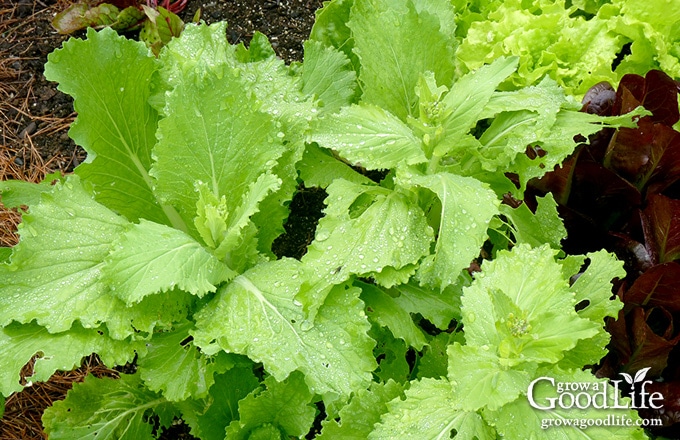
Mustard greens are a fast growing, cool season green enjoyed for its pungent, mustard flavor. Growing in shade will slow the plant from turning bitter and bolting. Harvest young for a peppery addition to salads, or enjoy mature leaves sautéed, boiled, or added to soups.
- Sunlight Requirements: Full sun to partial shade.
- How to Grow: Start from seed indoors, direct sow outside, or plant transplants.
- Harvest: About 30 days as baby greens, and 60 days for mature leaves. The flavor intensifies as the plant matures.
- Varieties to Consider: Red Giant, Ruby Streaks, and Florida Broadleaf.
Spinach
Spinach is a cool season leafy green that will bolt, or go to seed once the weather begins to warm. Growing spinach in a partially shaded garden allows for a longer growing period for this cool-season crop. Toss spinach leaves into a salad, sauté with olive oil and garlic, or chop and add to spring soups.
- Sunlight Requirements: Full sun to partial shade.
- How to Grow: Direct sow seeds in early spring and fall, or start transplants indoors.
- Harvest: About 30 days for baby greens, 45 days for mature leaves. Harvest the outer leaves and let the plants continue to produce.
- Varieties to Consider: Avon, Bloomsdale, Butterflay, Space, and Tyee.
- Learn More: How to Grow Spinach.
Swiss Chard
Swiss chard is a leafy green that produces harvests from early spring through the summer and into fall. Chard is a great substitute when the weather is too hot to grow spinach. Enjoy the stalks and leaves raw, steamed, and sautéed. Toss the greens into salads, sauté with olive oil and garlic, and chop the stems and add to soups and salads.
- Sunlight Requirements: Full sun to partial shade.
- How to Grow: Direct sow seeds or plant transplants indoors.
- Harvest: About 45 days for baby greens. Harvest young leaves at 3 inches as needed and let more foliage grow from the center of the plant.
- Varieties to Consider: Bright Lights, Fordhook Giant, and Celebration.
- Learn More: How to Grow Swiss Chard.
Tatsoi
Tatsoi is a cool-season Asian green with small, spoon-shaped leaves that form a rosette. Growing tatsoi in partial shade will extend the harvest by slowing the plant from bolting in warmer weather. The mustard-like flavor of Tatsoi mixes well in salads, stir-fries, and soups.
- Sunlight Requirements: Full sun to partial shade.
- How to Grow: Direct sow seeds or plant transplants indoors.
- Harvest: About 25 days for baby greens, 50 days for full sized plants. For baby leaves, cut outer leaves once they are about 4 inches, or cut mature plants at the stem above soil level.
- Varieties to Consider: Koji and Tatsoi Rosette.

Root Vegetables That Tolerate Partial Shade
Root vegetables can also grow successfully in partial shade, though they may take a little longer to mature. Because these crops store energy in their roots, they benefit from consistent light, but they don’t require intense, all-day sun to produce a harvest.
In partial shade, expect slightly smaller roots and slower growth compared to full sun conditions. In partial shade, expect slightly smaller roots and slower growth than in full sun. However, I have found that roots grown in cooler, shaded soil have more flavor and stay tender and less woody during warm weather.
If your garden receives at least 4–6 hours of sunlight per day, you can grow a productive crop of root vegetables.
The following root crops tolerate partial shade:
Beets
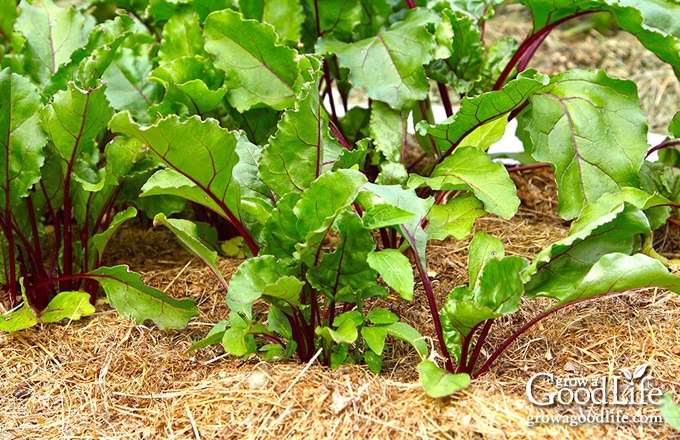
Beets are a cool season crop grown for both greens and roots. The greens thrive in partial shade. While the roots will be a bit smaller when grown in partial shade, they will be tender and tasty. Enjoy fresh greens in salads, soups, and sautéing, and earthy roots roasted, boiled, pickled, or canned.
- Sunlight Requirements: Full sun to partial shade.
- How to Grow: Direct sow seeds in spring and fall.
- Harvest: Around 30 days for greens and 60 days for roots. Harvest beet greens when they are 5 inches tall. You can snip a stalk or two from each beet plant without compromising the root growth. Harvest the beetroot when they are around 2 inches in diameter.
- Varieties to Consider: Chioggia, Detroit Dark Red, and Touchstone Gold.
- Learn More: See How to Grow Beets for more tips.
Carrots
Carrots are grown for their sweet roots. There are so many varieties of carrots that grow roots in different colors, shapes, and maturity times. The colors range from purple and dark red to orange and light yellow. Carrots will grow smaller in partial shade, and take a little longer to mature, but will produce a nice sweet crop even in warm weather.
- Sunlight Requirements: Full sun to partial shade.
- How to Grow: Direct sow seeds.
- Harvest: About 30 days as baby carrots and 60 days full size. Carrots are edible at any size. You can begin harvesting carrots as thinnings. Harvest mature carrots as needed when the roots size up.
- Varieties to Consider: Chantenay, Danvers, Imperator, Little Finger, and Parisian.
- Learn More: See How to Grow Carrots for more tips.

Parsnips
Parsnips are a long seasoned crop grown for their slightly nutty flavored roots. They grow best in cool temperatures and are harvested in the fall after frost sweetens their flavor. Parsnips tolerate partial shade, which helps keep the roots cool and prevents the soil from drying out. Enjoy parsnips roasted, pan-fried, and in soups and stews.
- Sunlight Requirements: Full sun to partial shade.
- How to Grow: Direct sow seeds in spring after the danger of heavy frost is past.
- Harvest: About 120-180 days for mature roots. Parsnips are edible at any size. You can begin harvesting as thinnings or small roots as needed when the roots size up. If you can, wait until after a frost to harvest; you’ll find the roots have a sweeter flavor.
- Varieties to Consider: Gladiator, Hollow Crown, and Javelin.
- Learn More: See How to Grow Parsnips for more tips.
Potatoes
Potatoes prefer cooler weather. While potatoes will thrive in full sun, the plants will also tolerate partial shade as well. Expect a lower yield and smaller tubers when growing potatoes in partial shade.
- Sunlight Requirements: Full sun to partial shade.
- How to Grow: Plant seed tubers as soon as the ground can be worked in the early spring, once the soil temperature reaches 45˚F.
- Harvest: About 70-120 days depending on the variety. For baby or new potatoes, you can begin harvesting as needed once the plants bloom. Dig carefully beneath the soil, pull out what you need, and allow the plant to continue growing. For mature potatoes, allow the foliage to die back before harvest.
- Varieties to Consider: Too numerous to list! I have enjoyed growing Dark Red Norland, Kennebec, and Rose Finn Apple Fingerling.
- Learn More: See How to Grow Potatoes for more tips.
Radish
This cool season crop will need partial shade to grow in warmer weather. Radishes are a great crop to succession sow and can be enjoyed for their roots and foliage.
Enjoy raw in salads and on a veggie platter. Try roasted, pan fried, and sautéed. The greens can be made into pesto, stir-fried, steamed, or added raw to salads.
- Sunlight Requirements: Full sun to partial shade.
- How to Grow: Direct sow seeds in early spring as the soil can be worked. Succession sow every two weeks.
- Harvest: About 20 days or when the radish is around 1 inch diameter. The greens are edible too!
- Varieties to Consider: Cherry Belle, French Breakfast, Sparkler, and Watermelon Mantanghong.
- Learn More: See How to Grow Radishes for more tips.
Rutabaga
Rutabagas, also known as Swedes, Canadian turnips, or yellow turnips, are grown for their large roots. It is a cross between cabbage and turnips. The roots are larger than turnips, yellow-fleshed, with a purple top.
Expect slower growth and slightly smaller roots when growing rutabaga in partial shade. Enjoy the roots steamed and mashed, roasted, or baked. The greens are also edible and can be steamed or sautéed.
- Sunlight Requirements: Full sun to partial shade.
- How to Grow: Direct sow seeds in early spring or late summer for a fall harvest.
- Harvest: About 30 days for greens, and 90 days for roots. Greens can be harvested when they are 6 inches tall. Dig up roots when they are 3 inches in diameter.
- Varieties to Consider: American Purple Top, Helenor, and Laurentian.
Turnips
Turnip is a cool season crop grown for both greens and roots. Warm weather makes roots woody, so growing in partial shade will help extend the harvest. Plan on harvesting smaller roots when growing turnips in partial shade. Enjoy turnips raw in salads or a veggie tray, or cooked by roasting, boiling, and mashing. Greens can be steamed or sautéed.
- Sunlight Requirements: Full sun to partial shade.
- How to Grow: Direct sow seeds in early spring or late summer for a fall harvest.
- Harvest: About 30 days for greens, and 90 days for roots. Greens can be harvested when they are 6 inches tall. Dig up roots when they are 3 inches in diameter. Harvest the fall crop after frost sweetens the flavor.
- Varieties to Consider: Golden Ball, Purple Top White Globe, Red Round, and White Egg.
Brassicas That Do Well in Partial Shade
Many brassicas (members of the cabbage family) grow well in partial shade, especially during warm weather. These cool-season crops prefer steady growth and moderate temperatures. A little afternoon shade can actually improve their performance by slowing bolting and preventing bitterness.
While full sun often produces larger heads, growing brassicas in partial shade can extend the harvest season and help prevent premature flowering. In hot climates or during late spring and early fall plantings, partial shade is often beneficial.
If your garden receives 3–6 hours of direct sunlight per day, many brassicas will still produce a dependable harvest.
The following brassicas tolerate partial shade:
Broccoli
Broccoli is a slow growing, cool season plant that will appreciate some shade as the growing season heats up. Broccoli is grown for its edible flower buds. Once the plant blooms, the flavor turns bitter. Growing broccoli in partial shade delays blooming. Enjoy broccoli raw or cooked in salads, soups, and stir-fries.
- Sunlight Requirements: Full sun to partial shade.
- How to Grow: Start from seeds indoors or plant transplants.
- Harvest: About 50 to 70 days. Harvest when the heads have tight, firm buds. Cut off the central head, and the plant will grow side shoots with smaller heads for another harvest.
- Varieties to Consider: Belstar, Green Comet, and Santee.
- Learn More: See How to Grow Broccoli for more tips.
Brussels Sprouts
Brussels sprouts are a long season crop planted in spring for a fall harvest. Partial shade will help the plant endure warm summers. Brussels sprouts taste better after frost has a chance to sweeten them a bit. Wait until after several light fall frosts to begin harvesting.
- Sunlight Requirements: Full sun to partial shade.
- How to Grow: Start from seeds indoors or plant transplants after all danger of frost is past.
- Harvest: About 90 to 100 days. After a light frost, harvest sprouts as needed for meals when they are about 1-2 inches in size. Begin harvesting from the bottom of the stalks and work your way up. Remove the foliage under the sprout, and twist off the sprout.
- Varieties to Consider: Long Island Improved, Jade Cross, Rosella Purple, and Red Bull.
Cabbage
Cabbage is a cool season crop that develops as round heads of foliage that wrap around each other tightly. Cabbage will grow well in partial shade, especially when the season warms up. Enjoy cabbage raw or cooked in soups, salads, stir-fry, and fermented as sauerkraut and kimchi.
- Sunlight Requirements: Full sun to partial shade.
- How to Grow: Start from seeds indoors or plant transplants.
- Harvest: 60-110 days depending on the variety. Heads will feel firm and solid. Harvest cabbage when the heads reach a usable size by cutting the head off at the soil level.
- Varieties to Consider: Fast Ball, Early Jersey Wakefield, and Danish Roundhead.
Cauliflower
Cauliflower is grown for its flower head, which is also called the “curd.” Although white is the most common, there is also a wide range of colors, including purple, orange, and green. Cauliflower grown in partial shade will grow slowly, with smaller heads, but the shade will help prevent discoloration and premature flowering. Enjoy raw, steamed, baked, pickled, and in stir-fries.
- Sunlight Requirements: Full sun to partial shade.
- How to Grow: Start seeds indoors for spring planting, plant transplants, or direct sow seeds in late summer for a fall harvest.
- Harvest: About 50-120 days depending on the variety. Harvest when the heads reach usable size, before the flower buds open. Cut the head at ground level and remove the leaves.
- Varieties to Consider: Flamestar, Cheddar, Graffiti, Romanesco Veronica, and Snow Crown.
Chinese Cabbage
Chinese cabbage is a cool season crop that has a mild, sweet flavor. It is also called Napa cabbage, and it has a milder flavor than regular cabbage. It grows in a tall, elongated head of crinkled leaves. Chinese cabbage will not tolerate hot temperatures. Partial shade will help keep the foliage from bolting and turning bitter.
- Sunlight Requirements: Full sun to partial shade.
- How to Grow: Direct sow seeds in spring and fall, or start transplants indoors.
- Harvest: 45 to 60 days. Harvest outer leaves that are about 8 inches tall, or let the cabbage mature and harvest whole heads.
- Varieties to Consider: Nikko, Merlot, Minuet, and Rubicon.
Kohlrabi
Kohlrabi is an easy to grow cool season crop that forms a ball above the ground. It is in the Brassica family and tastes like a combination of cabbage with a mild spicy kick like a radish.
Kohlrabi will produce smaller bulbs in partial shade, but will appreciate cooler temperatures as summer heats up. Enjoy raw in salads or coleslaws, roasted, or added to soups and stews.
- Sunlight Requirements: Full sun to partial shade.
- How to Grow: Direct sow seeds in spring and fall, or plant transplants.
- Harvest: About 55 days. Cut the bottom of the plant at the soil level once the bulb is about 2 to 3 inches in diameter.
- Varieties to Consider: Early Purple Vienna, Grand Duke, and Sweet Vienna.
Alliums and Perennials That Tolerate Shade
Several alliums and perennial vegetables can grow successfully in partial shade. While they produce the largest yields in full sun, many are adaptable and will still provide a harvest with moderate sunlight.
In partial shade, you may notice slightly smaller bulbs or slower development, but flavor is rarely affected.
Alliums (Onion Family Crops)
These crops are grown for their bulbs or stalks and tolerate partial shade surprisingly well:
Garlic
Garlic is grown for its large bulbs that are made up of cloves. Garlic is grown from cloves rather than seeds and is most often planted in the fall, allowed to overwinter, and harvested in summer. Garlic grown in partial shade will produce smaller cloves, but they will be just as flavorful.
- Sunlight Requirements: Full sun to partial shade.
- How to Grow: Plant garlic seed 4-6 weeks before your estimated hard frost date in the fall. Zones 5-8 should plant mid-October through mid-November.
- Harvest: Harvest garlic at any stage for fresh eating. Garlic is mature when the foliage at the base of the plant begins to turn brown.
- Varieties to Consider: There are so many varieties of garlic to grow. Consider trying German Extra Hardy, Music, Purple Glazier, Inchelium Red, and California Softneck.
- Learn More: See How to Grow Garlic for more info.
Leeks
Leeks are related to onions, but have a milder, sweeter flavor. They also don’t form a bulb like onions do, making them a great choice for growing in partial shade. Expect leeks to be a bit smaller when growing in partial shade. Use leeks in soups, stews, and meat and vegetable dishes.
- Sunlight Requirements: Full sun to partial shade.
- How to Grow: Start seeds early indoors or plant purchased transplants.
- Harvest: About 70-120 days, depending on the variety. Leeks take a long time to mature and are best harvested in the fall after frost. Leeks are ready to harvest young once the stalks reach about 1/2 -inch in diameter, or leave to mature fully. Harvest before the ground freezes.
- Varieties to Consider: King Richard, Poncho, and Takrima.
Scallions
Scallions, also called green onions or bunching onions, are grown for their green stalks and small bulbs. They add a mild onion flavor to salads, cooked recipes, and stir-fries.
- Sunlight Requirements: Full sun to partial shade.
- How to Grow: Direct sow seeds or start transplants indoors.
- Harvest: About 30 days at pencil size or up to 120 days for mature plants. About 30 days at pencil size or up to 120 days for mature plants. Pull 6-inch tall scallions at any stage and let the others develop further. The onion flavor intensifies with age.
- Varieties to Consider: Crimson Forest, Evergreen Long White, and White Lisbon.
- Learn More: See How to Grow Green Onions (Scallions) for more info.
Perennial Vegetables
These long-lived crops return year after year and are often resilient enough to handle partial shade once established:
Asparagus
Asparagus is a long-lived perennial vegetable grown for its tender spears that emerge as the soil warms in late spring and early summer. Harvest yields are higher in full-sun locations, but asparagus plants will also tolerate partial shade. Plan on growing more plants to accommodate the difference.
- Sunlight Requirements: Full sun to partial shade.
- How to Grow: Start from seed or from 1-2 year-old roots.
- Harvest: Plants should be 3 years old before harvesting. The first year, harvest spears that are 6 inches high and thicker than a pencil by cutting just above the soil level. Only harvest for 2 weeks the first year to allow the plant to become established. The second year, pick for 3 weeks, and the third season, pick for 4 weeks. Mature plants can be harvested for 4 to 6 weeks.
- Varieties to Consider: Jersey Knight, Mary Washington, and Pacific Purple.
Horseradish
Horseradish is a cool season crop grown for its pungent roots that are used as a condiment. Although it is a perennial, it is best grown as an annual because the roots become tough and fibrous in the second year. Horseradish thrives in partial shade if planted in moist, rich, well-drained soil.
- Sunlight Requirements: Full sun to partial shade.
- How to Grow: Plant crowns or root cuttings in early spring. Keep horseradish from spreading by growing it in its own area or in a container.
- Harvest: Dig roots in fall after the foliage is killed by frost.
- Varieties to Consider: Bohemian, Common, and Big Top Western.
Rhubarb
Rhubarb is a hardy, cool season perennial vegetable grown for its tart, tangy flavored leaf stalks. It doesn’t need much care once planted and will continue to emerge from the ground and produce a harvest each spring. As kids, we enjoyed the tart leaf stalks raw, dipped in sugar as a special treat. It is delicious used in pies, jellies, syrups, or baked goods.
- Sunlight Requirements: Full sun to partial shade.
- How to Grow: Plant root crowns in early spring. Let the rhubarb grow for one year before harvesting so it can become established.
- Harvest: At least 365 days. Harvest rhubarb stalks that are 12 inches tall by cutting the stalks off with a sharp knife and removing the leaves. Harvest lightly the first few years. Always leave at least one-third of the plant.
- Varieties to Consider: Canada Red, Colorado Red, and Victoria.
Other Cool-Season Crops for Shady Gardens
In addition to leafy greens, root vegetables, brassicas, and alliums, a few other cool-season crops can perform well in partial shade.
These vegetables prefer moderate temperatures and steady moisture, making them good candidates for gardens that receive morning sun and afternoon shade. While yields may be slightly lower than in full sun, they can still produce a dependable harvest with 3–6 hours of direct sunlight per day.
The following cool-season crops tolerate partial shade:
Celery
Celery is a slow-growing, cool-season crop valued for its crisp, flavorful stalks. Excessive heat can cause the stalks to become hollow or tough. While partial shade may result in shorter and slimmer stalks, celery thrives in cooler temperatures and generally grows stronger and healthier when protected from intense heat.
- Sunlight Requirements: Full sun to partial shade.
- How to Grow: Start seeds indoors or plant transplants in spring.
- Harvest: About 45 days at the baby stage, or 90-120 days for mature plants. Begin harvesting outer stalks as needed when the plants are about 6 inches tall, or harvest the entire mature plant by cutting at the soil level.
- Varieties to Consider: Conquistador, Tango, and Utah Tall.
- Learn More: See How to Grow Celery for more tips.
Peas
Peas are a cool season vegetable that will appreciate partial shade as the weather heats up. Snow and snap peas are enjoyed for their crunchy pods and immature peas. Garden peas, also known as English or sweet peas, are shelling peas that are removed from the inedible pod.
- Sunlight Requirements: Full sun to partial shade.
- How to Grow: Direct sow seeds in spring after the danger of heavy frost is past.
- Harvest: About 30-65 days, depending on the variety. Harvest peas frequently to encourage the plants to keep producing.
- Varieties to Consider: Oregon Sugar Pod, Super Sugar Snap, and Garden Sweet Shelling.
- Learn More: See How to Grow Peas for more info.
Vegetables That Do NOT Grow Well in Shade
While many cool-season crops tolerate partial shade, vegetables that produce fruit generally require full sun to perform well.
Fruiting vegetables need strong, consistent sunlight to produce flowers and develop mature fruit. Without at least 6–8 hours of direct sunlight per day, these plants often grow tall and leafy but produce few blossoms and very little harvest.
If your garden receives limited sunlight, it’s best to reserve the sunniest spots for the following crops:
- Tomatoes
- Peppers
- Eggplant
- Cucumbers
- Squash (summer and winter)
- Melons
These vegetables rely on abundant sunlight to fuel fruit production. In shaded conditions, you may see delayed flowering, smaller yields, and less flavorful fruit.
If your space is mostly shady, focus on leafy greens, root crops, and cool-season vegetables instead. Save fruiting crops for containers that can be moved to brighter areas, or for the sunniest part of your yard.
Tips for Growing a Successful Shade Vegetable Garden
A partially shaded garden is a different growing environment than one that receives full sun all day. Instead of viewing shade as a limitation, think of it as a unique microclimate that can benefit certain crops.
Here are some tips to help you get the best results from your shady garden space:
Improve Your Soil
When sunlight is limited, healthy soil becomes even more important. Enrich your garden beds with compost and organic matter to support steady growth. If your soil needs improvement, see How to Improve Garden Soil Naturally for practical tips to build healthy, fertile beds.
If tree roots are competing for nutrients and moisture, consider growing in raised beds to give your vegetables their own space.
Adjust Your Watering
Shade slows evaporation, so soil may stay moist longer than in full sun. Be careful not to overwater.
However, if you’re gardening under trees, roots may compete for moisture, and rainfall may not reach the soil evenly through the canopy. Check soil moisture regularly and water when the top inch feels dry. Mulching helps retain consistent moisture and regulate soil temperature.
Expect Slower Growth
Vegetables grown in partial shade often mature more slowly. Be prepared to wait a little longer than the seed packet suggests for roots and heads to reach full size.
The trade-off is often improved flavor and a longer harvest window for cool-season crops.
Watch for Slugs and Snails
Cool, damp areas are attractive to slugs and snails. Inspect plants regularly and use preventative methods if needed. Encouraging natural predators, such as frogs and toads, can also help manage pest populations.
Start with Strong Transplants
Starting seedlings indoors gives shade-grown crops a head start. Healthy transplants are better able to adapt once planted into garden beds with less sunlight. Follow these 10 Steps to Start Seeds Indoors to raise strong transplants before moving them into your garden.
Use Succession Planting
Partial shade can extend the life of cool-season crops into early summer and allow fall crops to establish under the dappled canopy of trees.
Plant new seeds as space opens up to keep your garden productive throughout the season. For more ideas on timing and spacing, see these Succession Planting Tips to maximize harvests in limited space.
Use Containers in Shady Spaces
Containers offer flexibility in gardens with shifting sunlight. Pots can be moved throughout the season to capture more sun as tree canopies fill in and the angle of light changes.
If you’re working with limited sunlight, growing vegetables in containers gives you greater control over soil and placement. Learn more in this guide to Growing Vegetables in Pots.
Can You Grow Vegetables Under Trees?
Growing vegetables under trees can be challenging, but it isn’t impossible. The key is understanding what you’re working with.
Trees create shade, compete for water and nutrients, and their canopies can block rainfall from reaching the soil below. In some cases, thick surface roots can also make digging difficult.
However, if the area receives at least a few hours of direct sunlight each day, especially in the morning, you can still grow shade-tolerant vegetables successfully.
To improve your chances:
- Choose leafy greens and cool-season crops that tolerate partial shade.
- Add compost regularly to replenish nutrients.
- Monitor soil moisture carefully, since tree roots may compete for water.
- Consider using raised beds or containers to reduce root competition.
Every garden is different. Observe how sunlight moves through your yard throughout the season, and experiment with small plantings to see which perform best in your space.
Frequently Asked Questions About Growing Vegetables in Shade
This article was originally published in 2016 and continues to receive questions from many folks who are working with less-than-perfect growing conditions. If you’re dealing with partial shade, tree cover, or a backyard that doesn’t receive full sun all day, you’re not alone.
Over the years, these have been some of the most common questions about growing vegetables in shade:
Can vegetables grow in full shade?
Most vegetables do not grow well in deep, full shade. All edible plants need some sunlight to produce energy and develop properly. If an area receives no direct sun during the day, vegetable growth will be weak, and yields will be very limited. For best results, aim for at least 3–6 hours of direct sunlight.
How many hours of sunlight do vegetables need?
Most vegetables need at least 6–8 hours of direct sunlight per day. However, many shade tolerant vegetables, especially leafy greens and cool-season crops, can grow successfully with 3–6 hours of sun.
Fruiting vegetables such as tomatoes and peppers require the most sunlight to produce well.
What vegetables grow in 4 hours of sun?
If your garden receives around 4 hours of direct sunlight, focus on leafy greens like lettuce, spinach, kale, and arugula. Many root crops, including carrots, beets, and radishes, will also grow in these conditions, though they may mature more slowly.
Can potatoes grow in shade?
Potatoes can grow in partial shade, but yields are usually smaller than in full sun. The plants may produce fewer and smaller tubers when grown with less than 6 hours of sunlight. For best production, plant potatoes in the sunniest part of your garden.
Can broccoli grow in shade?
Broccoli can tolerate partial shade, especially during warm weather. While heads may be slightly smaller, growing broccoli with afternoon shade can help prevent premature flowering and bitterness.
Can cucumbers grow in shade?
Cucumbers do not grow well in shade. As a fruiting crop, cucumbers require full sun (at least 6–8 hours per day) to produce flowers and develop mature fruit. In shady conditions, vines may grow but produce few cucumbers.
Herbs That Grow in Partial Shade
Don’t forget about herbs. Many culinary herbs tolerate partial shade and can even benefit from protection during the hottest part of the day. In fact, some leafy herbs produce more tender growth and better flavor when sheltered from intense afternoon sun.
If your garden has limited sunlight, consider adding shade-tolerant herbs alongside your vegetables. Parsley, cilantro, chives, mint, and several others adapt well to 3–6 hours of sunlight per day.
For a complete list, see Herbs That Grow in Shade and Partial Shade.
Make the Most of Your Shady Garden
Shade doesn’t have to limit your garden, it just changes how you approach it.
Every yard is different. Sunlight shifts throughout the season, tree canopies fill in, and small microclimates develop in ways you might not expect. Instead of trying to force full-sun crops into shaded spaces, experiment with vegetables that naturally tolerate partial shade and observe how they respond.
Try planting leafy greens in one area and root crops in another, and move the containers around to see where they perform best. Keep notes from season to season. You may be surprised at how productive a shady garden can become once you start working with your space instead of against it.
Even a few hours of sunlight each day is enough to grow real food for your table. With a little experimentation and the right crop selection, you can make the most of every corner of your yard.

Very helpful article, many thanks. I have a South facing garden in Arizona but the wall at the end of it is North facing. Do you think a large reflective surface directing the sunlight to the base of the wall where I would like to grow some of the salads you have mentioned will help? By the way this is for the Fall and Winter growing seasons only.
Tony, The only way to know is to give it a try. Consider planting in containers so they can be moved into more sunlight if they don’t fair well.
Thank you for your advice. I have been trying several different varieties of salads and so far Arugula and Mizuna are the best for growing in the shade of the wall. The problem with directing sunlight using a reflective surface is at this time of year is the position of the sun is so low that there are frequent interruptions from trees and the reflector has to be adjusted very often. So I am going ahead with planting in moveable containers as you suggested and intend to try a ‘vertical planting tree’ using lengths of metal gutters fastened to a SE facing wall. I will sow more salads here since they have shallow roots. There are some useful Youtube videos on this subject.
Tony, Thanks for the update! Arugula and Mizuna are extremely hearty greens and tend to grow very well in shady spots. Winter sun can be challenging. It sounds like you are on the right tract by using containers and experimenting with gutter gardening.
Hullo. Thank you for your article. Just wanted to ask, for plants like broccoli and cabbage, what is the minimum amount of sunlight that they can thrive on? Also, in terms of soil, I simply get the bags of soil from a garden center, is that sufficient? I do compost an amount of vegetables, but not sure if that’s enough.
Thanks you.
Ibrahim, Both Broccoli and Cabbage will grow in partial shade, 3-6 hours per day. As far as bagged soil goes, look for nutrient rich “garden soil” that is formulated for growing vegetables. Usually these blends include compost right in the mix. Avoid anything that is called “top soil” or says it is used for landscaping or yard fill.
This is exactly what I needed. Our yard is so shady but we have these nice planter boxes… Thanks
Hi. Thanks for your article. I have a shady area that I tried to grow cabbage and carrots and radishes. The radishes have grown and I can’t wait to harvest. But the other veges didn’t catch. I realize that the radishes are in partial shade while the remaining veges were in full shade. Help! Are there veges that grow in full shade?
Renu, Unfortunately, an area with full deep shade all day is not a good place for growing vegetables. Light moves throughout the year, so maybe watch and see if the sun reaches this area and try planting something then.
If you want to use that shady space to grow something edible, what about mushrooms?