
How to Pickle Garlic (Easy Refrigerator Pickled Garlic Recipe)
This post may contain affiliate links, which means that I may receive a commission if you make a purchase using these links. As an Amazon Associate I earn from qualifying purchases.
How to pickle garlic with an easy refrigerator recipe. Tangy pickled garlic cloves add bold flavor to sandwiches, dips, and charcuterie boards.
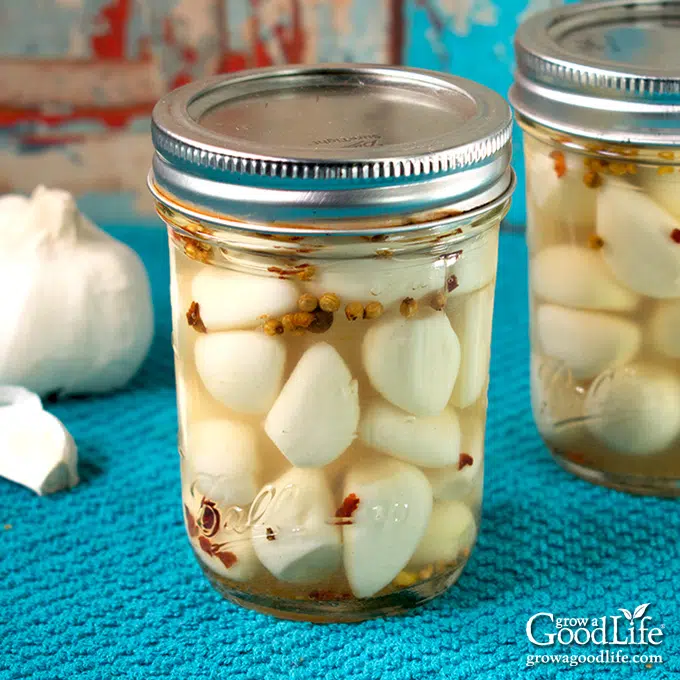
Pickled garlic is a delicious way to preserve fresh garlic cloves in a tangy vinegar brine infused with spices. The pickling process mellows garlic’s sharp bite, transforming it into a sweet, tangy, and slightly spicy condiment.
If you find yourself digging through jars of dilly beans or cucumber pickles searching for the garlic cloves, you may want to go ahead and pickle garlic on its own.
Pickled garlic cloves are perfect for layering on sandwiches or wraps, adding to antipasto platters, pickle plates, and charcuterie boards, or using as a cocktail garnish. They can also be chopped and used in recipes the same way as fresh garlic.
Try stirring them into sautéed greens, pureeing them into dips, or adding them to soups and stews. Of course, you can also enjoy pickled garlic straight out of the jar as a snack.
Even the garlic-infused vinegar brine can be used in recipes that call for vinegar, such as salad dressings, meat marinades, or drizzled over steamed or roasted vegetables.
This recipe shows you how to make pickled garlic using a simple refrigerator method, so you can enjoy flavorful garlic cloves without complicated preserving equipment.
Editorial Update
Update: This article originally included instructions for canning pickled garlic based on guidance that was previously published by OSU Extension and Washington State University Extension. That guidance has since been withdrawn because the supporting research could not be verified.
Because safe home canning recipes on Grow a Good Life must be backed by tested research, the canning instructions have been removed from this article.
If you would still like to enjoy pickled garlic, this recipe can be safely stored in the refrigerator instead. The recipe below shows how to safely make pickled garlic using a refrigerator method instead of canning.
What Is Pickled Garlic?
Pickled garlic is made by preserving fresh garlic cloves in a vinegar brine seasoned with salt, sugar, and spices. The pickling process mellows the sharp bite of raw garlic and gives it a tangy, slightly sweet flavor.
The cloves soften slightly as they absorb the brine, making them perfect for snacking, adding to charcuterie boards, or using in recipes the same way you would use fresh garlic.
Preserving Garlic in Vinegar
Pickling is one of the easiest ways to preserve garlic. Fresh garlic cloves are stored in a vinegar-based brine that slows spoilage and prevents bot while adding flavor.
Pickling uses vinegar to create an acidic environment that helps keep the garlic safe when stored in the refrigerator. The garlic gradually absorbs the tangy brine and softens slightly, creating a flavorful condiment that can be used in a wide variety of dishes.
Once you learn the basics of refrigerator pickling, you can use the same method with many vegetables. See my guide on how to make refrigerator pickles with any vegetable to try this technique with cucumbers, carrots, onions, and more.
Tips for Making Pickled Garlic
Use the freshest garlic possible for pickling. You want the cloves to be firm with no sprouts or soft spots. Depending on the size of your cloves, you’ll need about 1 1/4 to 1 1/2 pounds of garlic to get 4 cups of peeled garlic cloves.
Here are a few helpful tips for making pickled garlic at home.
Choosing Vinegar
You can safely use different types of commercial vinegar as long as it contains at least 5% acidity.
Good options include:
- Apple cider vinegar is made from fermented apples. It has a mellow sweet tart flavor. Its amber color will darken your garlic.
- White vinegar is clear vinegar made by distilling rye and corn. It tastes more acidic and sour than apple cider vinegar, but this may be just what you love about pickles.
- Wine vinegar is made from fermented red or white wine. They have a fruity flavor with a vibrant bite.
Customize the Flavor
This simple recipe uses pickling spice and red pepper flakes to flavor the brine.
If you enjoy experimenting with pickled vegetables, you can easily adjust the herbs and spices to create different flavor profiles.
Here are a few combinations to try:
- Dill Pickled Garlic: 1 bay leaf, 1/2 teaspoon mustard seeds, 1/2 teaspoon dill seeds, and 1/2 teaspoon red pepper flakes.
- Bread and Butter Pickled Garlic: 1/2 teaspoon mustard seeds, 1/4 teaspoon celery seeds, 1/4 teaspoon dried ginger, 1/4 teaspoon turmeric, and 1/4 teaspoon red pepper flakes.
- Hot and Spicy Pickled Garlic: 1 teaspoon chili powder, 1/4 teaspoon dried thyme, and 1/4 teaspoon red pepper flakes.
- Ranch Pickled Garlic: 1/2 teaspoon dried parsley, 1/4 teaspoon mustard seeds, 1/4 teaspoon dried onion flakes, 1/4 teaspoon dried dill, 1/4 dried chives, 1/4 teaspoon dried tarragon, 1/4 teaspoon black peppercorns.
Powdered spices can make the brine cloudy and slightly change its color, but the flavor will still be delicious.
Adjusting the Sweetness
The sugar helps mellow the sharp vinegar flavor. I wouldn’t eliminate it completely, but you can reduce the amount if you prefer a more tart pickle.
Peeling Garlic the Easy Way
The most time-consuming part of this recipe is peeling the garlic.
Fresh garlic that hasn’t fully cured can be especially difficult to peel. If you grow your own garlic, curing it first helps dry the skins and makes peeling much easier.
One helpful trick is to soak the cloves briefly in hot water.
- Separate the garlic heads into individual cloves.
- Trim off the root ends.
- Pour hot water over the cloves and let them soak for about 30 seconds.
- The skins should loosen and slip off easily.
Another method is shaking the cloves in a jar, but this can sometimes bruise the garlic.
Why Does Pickled Garlic Turn Blue? (And Is It Safe to Eat?)
Don’t be alarmed if your garlic turns a greenish-blue color in the jar after pickling.
Garlic can sometimes turn blue or green when combined with acidic ingredients like vinegar. This reaction happens more often with very fresh garlic.
This color change is a natural reaction between enzymes and sulfur-containing amino acids in the garlic and minerals or acids in the pickling brine. While the color may look unusual, blue garlic is perfectly safe to eat, and the flavor remains the same.
If you would like to reduce the chance of the color change, a few small steps may help:
- Use a salt with no iodine, such as canning salt or kosher salt.
- Use a stainless steel pot and utensils rather than copper or aluminum, which can react with acidic ingredients.
- If your tap water contains a lot of minerals, consider using filtered or bottled water when making the brine.
Even with these precautions, garlic may still occasionally turn blue or green during pickling. This natural color change does not affect the safety or flavor of the garlic.
How to Make Pickled Garlic
You can find the full printable recipe below, but here is an overview of the process.
Step 1: Gather Your Equipment
Before you begin, gather your kitchen equipment and prepare your jars.
You will need:
- 2 pint jars with lids
- Measuring cups and measuring spoons
- Large saucepan
- Slotted spoon
- Ladle
- Funnel (optional but helpful)
- Cutting board and knife
- Large bowl for soaking garlic
Wash the jars and lids well in warm, soapy water and rinse well. Let them air dry or place them on a clean kitchen towel until you are ready to fill them.
Step 2: Prepare the Garlic
To peel your garlic, bring a pot of water to a simmer, separate your garlic heads into individual cloves, trim off the root end, and place them in a heatproof bowl. Pour the warm water over the cloves, and let them soak for about 30 seconds.
Stir gently, and the skins will begin to loosen. Peel the garlic and rinse to remove the papery skins. Set aside on a kitchen towel while you work through the rest of the garlic. Measure 4 cups of peeled garlic.

Step 3: Make the Pickling Brine
Combine the vinegar, sugar, salt, and spices in a medium pot. Cover and bring to a boil over medium-high heat. Stir to dissolve the sugar, and boil for 1 minute.
Add the prepared garlic cloves and boil for an additional minute, then remove the pot from the heat and let it cool slightly.

Step 4: Fill the Jars
Using a slotted spoon, transfer the garlic into clean jars. Ladle the warm brine over the cloves, making sure they are fully covered.
Cover the jar and let it cool at room temperature for about an hour. Then, transfer to the refrigerator.

Step 5: Refrigerate
Store the jars in the refrigerator and let the flavors develop for about 1 week before using. Shake or stir the jars occasionally during the first few days to help distribute the spices.
For the best quality, enjoy the pickled garlic within 3 to 4 months.
Ways to Use Pickled Garlic
Pickled garlic adds a bold, tangy flavor to many dishes.
Try using it:
- On sandwiches and wraps.
- On charcuterie boards or antipasto platters.
- As a cocktail garnish.
- Chopped into salad dressings.
- Added to sauces, soups, or stews.
- Mixed into dips and spreads.
- Tossed with roasted vegetables.
It’s also perfectly fine to enjoy pickled garlic straight from the jar as a snack.
Be sure to save that leftover brine to add a garlicky flavor to homemade salad dressings, marinades, or drizzled over roasted vegetables.
How to Pickle Garlic (Easy Refrigerator Pickled Garlic Recipe)
Ingredients
- 4 cups garlic cloves (about 1¼–1½ pounds garlic)
- 2 cups white vinegar 5% acidity
- 1/2 cup cane sugar
- 1/2 teaspoon canning salt
- 1 teaspoon pickling spices optional for flavor
- 1/2 teaspoon red pepper flakes optional for flavor
Instructions
Prepare the Garlic:
- Remove the garlic cloves from the bulb, trim off the root end, peel, and measure 4 cups of peeled garlic.
Make the Pickling Brine:
- Add the vinegar, sugar, salt, and spices to a medium pot. While stirring, bring to a boil over medium-high heat, and boil for 1 minute.
- Add the prepared garlic and warm for an additional 1 minute, then remove the pot from the heat and let it cool briefly.
Fill the Jars:
- Use a slotted spoon to pack the garlic into the jar. Ladle the hot brine over the garlic, covering the cloves completely with the liquid.
- Cover the jars and let them cool at room temperature for about an hour. Then, transfer to the refrigerator.
Store in the Fridge:
- Place the jars in the refrigerator and let the flavors develop for about 1 week before using. Shake or stir the jars occasionally during the first few days to help distribute the spices.
- For the best quality, enjoy the pickled garlic within 3 to 4 months. If any mold or yeast growth develops, discard the garlic and liquid.
Nutrition
Frequently Asked Questions
If you’re new to pickling garlic, you may have a few questions about storage, flavor, and safety. Here are answers to some of the most common questions.
How long does pickled garlic last in the refrigerator?
Refrigerator pickled garlic will keep for about 3 to 4 months when stored in a sealed jar in the fridge. For best quality, make sure the garlic cloves remain fully submerged in the brine and always use clean utensils when removing cloves from the jar.
Why did my pickled garlic turn blue?
Garlic can sometimes turn blue or green when it reacts with acidic ingredients like vinegar. Although the color may look unusual, blue garlic is safe to eat, and the flavor remains the same.
Can pickled garlic be canned?
Pickled garlic was once shared as a water bath canning recipe by some extension sources. However, the research supporting that recommendation could not be verified, and those recipes have now been removed.
Garlic is a low-acid food. When garlic is pickled in vinegar, the brine’s acidity must penetrate the cloves completely. Because garlic cloves vary widely in size and density, researchers have not established a tested process time that reliably ensures safe acidity in the center of the cloves. So there is a risk of spoilage and botulism.
Without that research, extension services cannot recommend a home canning method. Current guidance recommends storing pickled garlic in the refrigerator instead of canning it.
How long should pickled garlic sit before eating?
For the best flavor, allow the garlic to sit in the refrigerator for at least one week before eating. This resting time allows the cloves to absorb the vinegar brine and develop their sweet, tangy flavor.
What does pickled garlic taste like?
Pickled garlic has a much milder flavor than raw garlic. The vinegar brine mellows the sharp bite and gives the cloves a tangy, slightly sweet flavor with a hint of spice from the seasonings.
The texture also softens slightly, making pickled garlic perfect for snacking, adding to charcuterie boards, or chopping into recipes.
Enjoy Your Homemade Pickled Garlic
Pickled garlic is an easy way to preserve fresh garlic cloves while adding a tangy burst of flavor to your kitchen. With just a few simple ingredients and a short amount of prep time, you can transform fresh garlic into a delicious condiment that keeps in the refrigerator for months.
Keep a jar on hand for adding to sandwiches, charcuterie boards, salads, and cooked dishes, or enjoy the cloves straight from the jar for a bold, garlicky snack.
If you grow your own garlic and have an abundant harvest, pickling is just one way to preserve it. You can also learn how to freeze garlic for long-term storage or how to cure and store garlic so your harvest keeps well for months.
If you love salsa, consider adding our eBook, Grow a Good Life Guide to 50 Salsa Canning Recipes, to your resource library. This 72-page eBook is packed with a variety of delicious salsa recipes, including classic tomato salsas to roasted and grilled salsas to tomatillo and delicious fruit blends, all safe for water bath canning. It’s the perfect guide to help you preserve your garden harvests.

Thank you for sharing your recipe! We made your recipe with five pounds of peeled garlic and are patiently waiting for them to be ready. I understand one months and longer is the goal here but have you tried any sooner? If so, how long before they were decently edible? I would love to try a jar sooner.
Thanks so much for trying the recipe, Paul! Just to clarify, the recipe calls for about 1 week (not 1 month) for the flavors to develop. That said, you can definitely taste a jar sooner if you’d like—after 2-3 weeks the garlic is usually tangy and enjoyable, though it does continue to mellow and deepen the longer it sits.
my garlic has such a STRONG garlic taste. anything I can do to mellow without softening?
Nancy, The garlic flavor does mellow over time.
I read that to get rid of the vinegar flavor, rinse with water before you use the garlic. Haven’t tried it yet, but will soon.
Diane, Absolutely, you can try rinsing the pickled garlic with water if you’d like to reduce the vinegar flavor. However, please keep in mind that the mild vinegar taste in pickled garlic can complement and enhance the flavors of various dishes, especially when used in cooking. It might not be necessary to rinse, but it ultimately depends on your personal preference and how you plan to use the garlic. Feel free to experiment and see what works best for your taste buds.
Would raw unfiltered honey work okay instead of sugar ?
Amy, Yes, you can substitute raw unfiltered honey for sugar in this recipe.
I really want to try this but I have a question. Just to confirm–even though this garlic has been brined in vinegar I can still use it in recipes like fresh garlic? The vinegar won’t tamper with the flavors in my recipes?Thanks!
Lisa, You can certainly use the pickled garlic in recipes just like fresh garlic. However, it’s important to note that the flavor profile of pickled garlic is slightly different compared to raw garlic. The brining process gives the garlic a tangy and slightly milder flavor, which can add a unique twist to your dishes. While the vinegar does impart its own taste, it can complement and enhance the overall flavors in your recipes. Also, processing the jars in a water bath canner cooks the garlic, softening the cloves and mellowing the flavor.
Hi, not a comment but a question. Is the sugar a required ingredient for food safety, or is it just for flavor?
Thanks
Carolyn, Sugar is to balance the flavor in this recipe. Leaving it out will not compromise the safety.
This is how I did my garlic, so I’m happy.
Do the cloves need to be whole or could you mince them?
Gage, Yes, you could mince the garlic.
Love the flavour of the brine.