
How to Dehydrate Zucchini for Food Storage
This post may contain affiliate links, which means that I may receive a commission if you make a purchase using these links. As an Amazon Associate I earn from qualifying purchases.
Dehydrating zucchini is an easy way to preserve your harvest. Learn how to dry zucchini in a dehydrator or oven and store it for soups, pasta, and casseroles.

Zucchini plants are known for producing abundant harvests, often leaving you with more squash than you know what to do with. One simple way to preserve the harvest is by dehydrating zucchini.
Drying zucchini removes the moisture while concentrating the flavor, turning fresh summer squash into lightweight, shelf-stable food that stores easily in your pantry. Dehydrated zucchini can be added directly to soups, pasta dishes, casseroles, and other cooked meals where it quickly rehydrates.
Once dried, zucchini slices become brittle and compact, making them easy to store in jars and convenient to add to everyday meals.
In this guide, you’ll learn how to dehydrate zucchini using a food dehydrator or your oven, along with tips for storing and using dried zucchini throughout the year.
Why Dehydrate Zucchini?
Dehydrating zucchini is a simple way to preserve a large harvest without taking up valuable freezer or pantry space.
- Space-saving storage: Fresh zucchini contains a lot of water, so it shrinks dramatically when dried. About four pounds of zucchini can reduce down enough to fit into a pint-sized jar.
- Easy to add to meals: Dehydrated zucchini rehydrates quickly in hot dishes. Add a handful directly to pasta water, soups, stews, or sauces.
- Great for long-term food storage: When stored properly in airtight containers, dried zucchini can last for months in the pantry.
- Versatile to use: Dried zucchini slices can be rehydrated for casseroles, chopped into soups, or ground into powder for smoothies and baked goods.
What You’ll Need to Dehydrate Zucchini
- Food dehydrator or oven
- Knife
- Cutting board
- Baking sheets (if using oven)
- Parchment paper(if using oven)
How to Dehydrate Zucchini in a Food Dehydrator
Using a food dehydrator is the easiest and most reliable way to dry zucchini. A dehydrator circulates warm air around the trays, removing moisture slowly and evenly so the zucchini dries thoroughly without cooking.
Start with fresh, firm zucchini and slice it evenly so the pieces dry at the same rate. Once arranged on the trays, the dehydrator does most of the work, turning a basket of summer squash into shelf-stable food that stores easily in your pantry.

Step 1: Prepare Your Zucchini
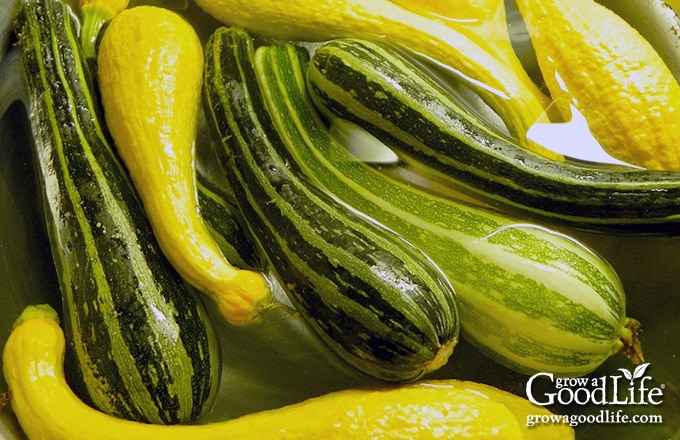
Use freshly harvested, small to medium-sized zucchini with smooth skin and no soft spots or blemishes. Younger zucchini tend to have fewer seeds and a firmer texture, which dries better.
Wash the zucchini well under running water to remove soil and garden debris. Trim off both ends and slice the zucchini into 1/4-inch rounds. Try to keep the slices uniform so they dry evenly.
Large overgrown zucchini tend to have spongy seed cavities that don’t dehydrate well. If your zucchini is large, cut it in half lengthwise and scoop out the seeds before slicing. Then cut into evenly sized pieces.
Step 2: Arrange the Zucchini on the Dehydrator Trays
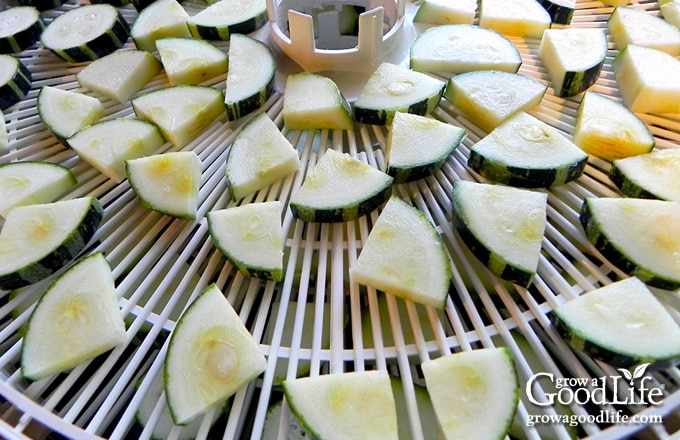
Lay the zucchini slices in a single layer on your dehydrator trays.
The pieces can touch, but try not to overlap them. Good airflow around each slice helps the zucchini dry evenly and prevents soft spots.
Step 3: Dry the Zucchini
Set your dehydrator temperature between 125°F and 135°F (or follow the instructions for your specific dehydrator model).
Drying time typically ranges from 5 to 11 hours, depending on:
- Thickness of your slices.
- Moisture content of the zucchini.
- Humidity in the air.
If your dehydrator has multiple trays, rotate the trays halfway through drying to ensure even dehydration.
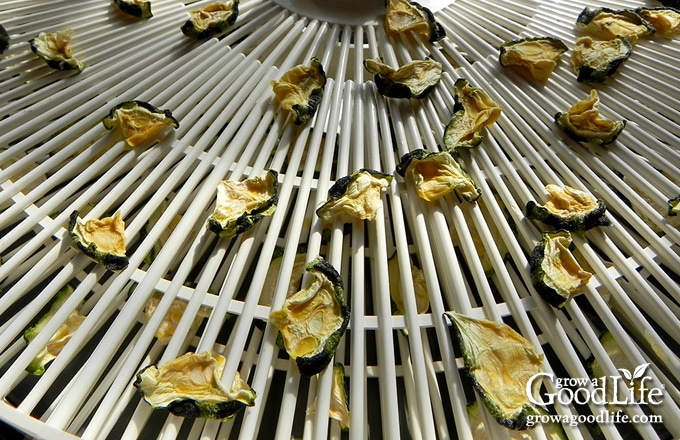
The zucchini is finished drying when the slices become brittle and snap easily when bent.
Step 4: Let the Dried Zucchini Cool
Remove the trays from the dehydrator and allow the zucchini slices to cool for about 10 minutes before storing.
Cooling prevents condensation from forming when the zucchini is placed into storage containers.
Step 5: Store Dried Zucchini in an Airtight Jar
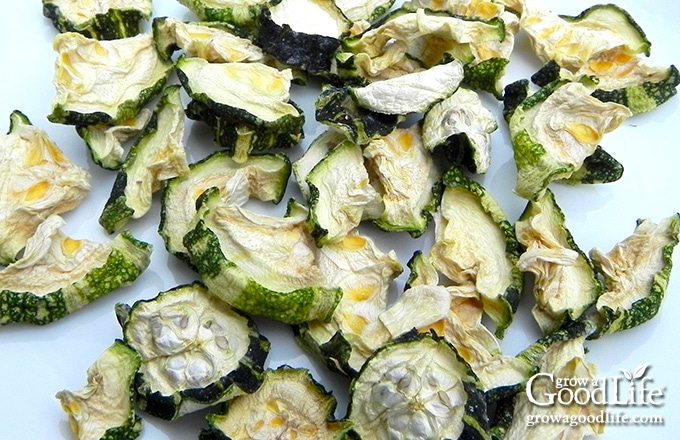
Once completely cooled, transfer the dried zucchini into airtight containers such as glass jars or food storage containers.
Label the jars and store them in a cool, dark location such as a pantry or cupboard.
Properly dried and stored zucchini can last up to a year or longer while maintaining good flavor and quality.

How to Dehydrate Zucchini in the Oven
If you don’t have a food dehydrator, you can also dry zucchini in your oven. While ovens are not designed specifically for dehydration, they can work well if set to a low temperature and monitored carefully.
Because ovens typically run warmer than dehydrators, the key is to use the lowest temperature setting and allow moisture to escape while the zucchini dries.
Step 1: Prepare the Zucchini
Choose fresh, firm zucchini with no soft spots or blemishes. Smaller zucchini tend to dry better because they contain fewer seeds and less excess moisture.
Wash the zucchini well under running water to remove soil and debris. Trim off the ends and cut the zucchini into 1/4-inch pieces, keeping the slices as even as possible so they dry at the same rate.
If the zucchini is large, cut it in half lengthwise, scoop out the seeds, then cut the flesh into evenly sized pieces so it dries evenly.
Step 2: Arrange the Slices on Baking Sheets
Line baking sheets with parchment paper to prevent sticking.
Lay the zucchini slices in a single layer on the baking sheets. The slices can touch, but avoid overlapping them so the warm air can circulate around each piece.
If you are drying multiple trays, leave space between racks in the oven so air can move freely.
Step 3: Dry the Zucchini in the Oven
Set your oven to the lowest temperature setting, usually around 150°F.
Place the baking sheets in the center of the oven. To help moisture escape, prop the oven door open slightly using a wooden spoon or heat-safe utensil.
Drying time can range from 2 to 5 hours, depending on:
- Thickness of the slices.
- Moisture content of the zucchini.
- How evenly your oven maintains low heat.
Check the zucchini occasionally and rotate the trays if needed so the slices dry evenly.
The zucchini is finished drying when the slices are brittle and snap easily when bent.
Step 4: Let the Zucchini Cool
Remove the baking sheets from the oven and allow the zucchini slices to cool for about 10 minutes.
Cooling helps prevent condensation when the dried zucchini is transferred to storage containers.
Step 5: Store the Dehydrated Zucchini
Once fully cooled, place the dried zucchini into an airtight container, such as glass jars or food storage containers.
Label the containers and store them in a cool, dark place like a pantry or cupboard.
Properly dried zucchini can be stored for up to a year or longer when kept in dry conditions.
How to Tell When Zucchini Is Fully Dry
Dehydrated zucchini is finished drying when the slices are completely brittle and snap easily when bent. If the pieces feel flexible or leathery, they still contain moisture and should continue drying.
Properly dehydrated zucchini should:
- Feel completely dry with no soft spots.
- Break or snap cleanly when bent.
- Show no visible moisture when broken in half.
Drying times can vary depending on the thickness of the slices, the moisture level in the zucchini, and the humidity in your kitchen.
When in doubt, it’s better to dry the zucchini a little longer rather than store pieces that still contain moisture.
Allow the dried zucchini to cool completely before storing so condensation does not form inside the container.
Can You Dehydrate Shredded Zucchini?
Yes, shredded zucchini can also be dehydrated. This method works well if you plan to use the zucchini in soups, casseroles, sauces, or blend it into zucchini flour or powder.
Grate the zucchini using a box grater, roll it up in a clean towel, and squeeze out excess water. Then spread the shredded zucchini in a thin, even layer on dehydrator trays lined with mesh, fruit leather sheets, or parchment paper so the small pieces do not fall through the trays.
Dry at 125°F to 135°F until the zucchini is completely brittle, and no moisture remains. Because shredded zucchini contains a lot of moisture, it may need to be stirred or broken apart occasionally during drying to prevent clumping.
A food dehydrator is recommended for shredded zucchini. Drying shredded zucchini in an oven is difficult because the small pieces can cook or scorch before they dry completely. The gentle, circulating airflow of a dehydrator removes moisture more evenly.
Once fully dried, the shredded zucchini can be stored as-is or ground into powder using a blender or spice grinder.
How to Store Dehydrated Zucchini
Once the zucchini slices are completely dry, allow them to cool before storing. Cooling prevents condensation from forming inside the storage container.
Transfer the dried zucchini into airtight containers, such as a mason jar with a tight-fitting lid, or a food storage container. Store in a cool, dark place like a pantry or cupboard.
Check for Moisture Before Long-Term Storage
After filling your jars, it’s a good idea to check the zucchini for any remaining moisture over the next several days.
Shake the jar once a day for about a week and watch for signs of condensation inside the container. If you see moisture forming on the glass or the pieces feel soft, the zucchini was not completely dry.
Simply return the zucchini to the dehydrator or oven and continue drying until the pieces are brittle.
Once you are confident the zucchini is fully dry, store the jars in a cool, dark location. Properly dehydrated zucchini can last up to a year or longer when stored in good conditions.
How to Use Dehydrated Zucchini
Dehydrated zucchini is very easy to use because it rehydrates quickly in hot dishes. In many recipes, you can simply add the dried pieces directly to the pot and let them absorb moisture as the food cooks.
Here are a few simple ways to use dried zucchini:
- Add to pasta dishes: Toss a handful of dehydrated zucchini slices into the pot when cooking pasta. By the time the pasta is done, the zucchini will be tender and ready to mix with your favorite sauce.
- Stir into soups and stews: Add dried zucchini directly to simmering soups, stews, and chili. The pieces will rehydrate as the dish cooks and blend right in with the other vegetables.
- Use in casseroles: To rehydrate zucchini for casseroles, place the dried pieces in a bowl and cover them with boiling water. Let them soak for about 10 minutes, drain, and add them to your recipe.
- Make zucchini powder or flour: Fully dried zucchini can be ground into powder using a blender, spice grinder, or food processor. The powder can be added to smoothies, soups, sauces, and baked goods for an easy vegetable boost. Try replacing about 1/4 cup of regular flour with zucchini flour in muffins, quick breads, or other baked goods.
- Add to homemade seasoning blends: Ground zucchini powder can be mixed into vegetable seasoning blends, soup mixes, dried herbs, or homemade bouillon powders for an extra boost of flavor and nutrients.
Dehydrating zucchini is a simple way to turn an abundant summer harvest into convenient pantry ingredients that are ready to use all year long.
How to Dehydrate Zucchini (Dehydrator or Oven Method)
Ingredients
- 4 pounds zucchini or yellow summer squash
Instructions
Prepare the Zucchini:
- Wash zucchini or summer squash under clean running water to remove soil and debris.
- Trim off the ends and slice the squash into ¼-inch rounds, keeping the slices as even as possible so they dry evenly.
To Dry Using a Food Dehydrator:
- Arrange the zucchini slices in a single layer on dehydrator trays.
- Set the dehydrator temperature between 125°F and 135°F, or according to your dehydrator manufacturer's instructions.
- Dry until the zucchini slices are brittle and snap easily when bent, about 5–11 hours depending on humidity and moisture levels.
- Rotate trays halfway through drying if needed for even dehydration.
To Dry Zucchini in an Oven:
- Arrange the slices in a single layer on parchment-lined baking sheets.
- Set the oven to the lowest temperature setting, usually around 150°F.
- Place the baking sheets in the center of the oven and prop the door open slightly to allow moisture to escape.
- Dry until the zucchini slices are brittle and snap easily, about 2–5 hours, checking occasionally and rotating trays if needed.
Storing Dehydrated Zucchini
- Allow the dried zucchini to cool completely before storing.
- Transfer the pieces to airtight containers, label, and store in a cool, dark location.
- Yield: About 1–2 pint jars of dried zucchini.
Notes
Nutrition
Frequently Asked Questions
Preserve Your Zucchini Harvest for Later
Dehydrating zucchini is a simple way to turn an abundant summer harvest into shelf-stable food for your pantry. A basket of fresh zucchini can quickly be transformed into jars of dried slices that take up very little space and are ready to add to soups, pasta dishes, casseroles, and other meals throughout the year.
With a little preparation now, you can enjoy the flavor of summer zucchini long after the garden season has passed.
If you grow zucchini, and your garden is producing more than you can use fresh, drying is just one of several ways to preserve the harvest. Here are other preservation methods that help extend the season:
- 5 Ways to Freeze Zucchini: Tips to preserve zucchini in the freezer in various ways, including zucchini cubes or slices, noodles, or shredded for muffins and zucchini breads.
- Ways to Preserve Zucchini: A collection of safe and practical methods for preserving zucchini and summer squash so that harvest doesn’t go to waste.
For more food dehydrating ideas, see these helpful guides:
- 3 Ways to Dry Peppers for Food Storage: Preserve sweet or hot peppers so they’re ready to add to soups, sauces, and seasoning blends.
- How to Dehydrate Onions for Food Storage: Learn how to make your own dried onions for cooking and pantry storage.
- How to Make Homemade Garlic Powder: Turn fresh garlic into flavorful homemade garlic powder for your spice cabinet.
Good planning is key to a successful vegetable garden
Whether you are new to growing your own food or have been growing a vegetable garden for years, you will benefit from some planning each year. You will find everything you need to organize and plan your vegetable garden in my PDF eBook, Grow a Good Life Guide to Planning Your Vegetable Garden.

Hi! How long does this keep at rooms temperature?
Caylah, I recommend using within a year for the best quality.
Your instructions say to slice zucchini into 1/4 inch slices, yet your pictures show much THICKER halves and quarters of a slice. ???? I am confused..
Barb, The images you mentioned show zucchini slices that are indeed cut into halves and quarters, but they are still approximately 1/4 inch thick. The reason for cutting them this way, especially with larger zucchinis, is to ensure that the pieces are of similar size. By doing so, they can dry more uniformly and at a similar rate. Feel free to cut your pieces any size you want based on the way you will use them.
I hope this clarifies the reasoning behind the slightly different appearances in the images. I apologize for any confusion caused. If you have any further questions or concerns, please feel free to let me know.