How to Grow Potatoes: A Complete Guide for Home Gardeners
This post may contain affiliate links, which means that I may receive a commission if you make a purchase using these links. As an Amazon Associate I earn from qualifying purchases.
Discover how to grow potatoes at home for incredible flavor. Learn when to plant, how to care for plants, and how to harvest and store potatoes.

Homegrown potatoes are one of those garden crops that truly taste different. Freshly harvested from your own soil, they’re richer, creamier, and more flavorful than anything you’ll find at the grocery store, especially new potatoes or freshly dug storage varieties cured for winter meals.
Potatoes are also adaptable. They grow just as happily in garden beds as they do in raised beds or containers on a sunny patio. Whether you’re planting a small patch for fresh eating or growing a larger crop to store and preserve, potatoes fit easily into almost any home garden.
Unlike many vegetables, potatoes don’t require fancy equipment or perfect soil to succeed. With a little planning and the right growing method for your space, you can harvest a generous crop. And once you’ve experienced the flavor of homegrown potatoes, it’s hard to imagine going back.
This guide walks you through the entire process of growing potatoes, from choosing seed potatoes and deciding whether to chit them, to planting, caring for your crop, harvesting, and storing or preserving your harvest. Along the way, you’ll find links to more detailed guides so you can explore each step at your own pace and grow potatoes with confidence.
Choosing the Right Potatoes to Grow
Before planting, one of the most important decisions you’ll make is choosing which potatoes to grow. Starting with healthy seed potatoes and varieties suited to your garden will set you up for a stronger, more productive crop from the very beginning.
Why Seed Potatoes Matter
Seed potatoes are potatoes that are grown specifically for planting. They’re carefully selected and certified to be disease-free, which helps prevent common problems like blight and viruses from spreading in your garden.

While it can be tempting to plant grocery store potatoes, they’re often treated with sprout inhibitors and may carry diseases that reduce yields or affect future crops.
Starting with high-quality seed potatoes gives your plants a healthy head start, leading to more vigorous growth, larger potatoes, and better overall harvests.
Choosing healthy, disease-free seed potatoes is one of the most important steps for a successful crop. This guide explains where to buy seed potatoes, what to look for, and why certified seed makes a difference: Sourcing Seed Potatoes for the Backyard Garden.
Choosing Potato Varieties for Your Garden
Potatoes come in a wide range of shapes, colors, textures, and flavors. Some varieties are creamy and perfect for mashing, while others hold their shape beautifully in soups, salads, and roasted dishes. Choosing the right type depends on how you plan to use them and how long your growing season is.
Varieties and Uses
There are over 100 varieties of potatoes available for the home gardener. They range in color, flavor, shape, size, and starch content. Common classifications include white rounds, red rounds, russets, yellows, blues, and fingerlings.
White Potatoes (White Rounds)
White potatoes are round or oblong with thin, light tan skin and firm, creamy flesh. They are considered an excellent all-purpose potato.
- Uses: Boiling, grilling, mashing, and frying.
- Ideal for: Baked, mashed, roasted, potato salad, and scalloped potatoes.
- Examples: Elba, Irish Cobbler, Kennebec, and Superior.
Red Potatoes (Red Rounds)
Red potatoes have thin, smooth red skin and white or cream-colored flesh. They tend to be waxy with a moist, creamy texture that helps them hold their shape.
- Uses: Boiling and roasting.
- Ideal for: Potato salads, casseroles, soups, and stews.
- Examples: Dark Red Norland, Chieftain, and Red Pontiac.
Russet Potatoes
Russets are long with thick, netted brown skin and white to pale yellow flesh. Their dry, starchy texture makes them ideal for fluffy interiors.
- Uses: Baking, frying, mashing, and roasting.
- Ideal for: French fries and classic baked potatoes.
- Examples: Blazer Russet, Butte, Caribou, Goldrush, and Russet Burbank.
Yellow Potatoes
Yellow potatoes have light tan to golden skin and yellow flesh. They offer a smooth texture and slightly buttery flavor.
- Uses: Boiling, roasting, frying, and grilling.
- Ideal for: Mashed potatoes, roasted vegetables, and potato salads.
- Examples: Yukon Gold and Yellow Finn.
Blue and Purple Potatoes
These colorful potatoes have blue or purple skin with white, yellow, or purple flesh. They are moist, firm, and slightly nutty in flavor.
- Uses: Roasting, boiling, baking, and grilling.
- Ideal for: Potato salads and roasted vegetable dishes.
- Examples: Adirondack Blue, Purple Majesty, and Purple Viking.
Fingerling Potatoes
Fingerlings are small, narrow, and typically 2–4 inches long. They come in a variety of skin and flesh colors and have a firm, moist texture with a mild, earthy flavor.
- Uses: Roasting, boiling, and baking.
- Ideal for: Sheet-pan meals and colorful potato salads.
- Examples: AmaRosa, Banana, French Fingerling, Pinto, and Rose Finn Apple.
Choosing by Maturity Date
In addition to type, potatoes are grouped by how long it takes them to mature. These timeframes are approximate and will vary depending on climate and growing conditions.
Early-Season Potatoes (65–80 Days)
Early potatoes mature quickly and are often harvested as new potatoes about 10 weeks after planting. They have thin skins, a delicate texture, and a slightly sweet flavor.
Best for:
- Short growing seasons.
- Areas with hot summers.
- Avoiding peak Colorado potato beetle or late blight pressure.
- Growing in containers or grow bags.
Examples: Chieftain, Dark Red Norland, Irish Cobbler, Sangre, and Yukon Gold.
Mid-Season Potatoes (80–90 Days)
Also called main-crop potatoes, mid-season varieties can be harvested young or left to mature fully. They produce larger tubers ideal for baking and roasting.
Best for:
- Long springs and mild summers.
- In-ground planting with plenty of space.
- Storage with proper curing.
Examples: Adirondack Red or Blue, Caribou Russet, Goldrush Russet, Kennebec, Purple Viking, and Yukon Gem.
Late-Season Potatoes (90+ Days)
Late-season potatoes require a longer growing season and produce high yields of large tubers that store well. In warmer climates, plant late-season varieties in early summer for a fall harvest. In cooler regions, plant in spring.
Best for:
- Long growing seasons.
- Fall harvest and winter storage.
- Growing in-ground with room for tuber development.
Examples: Burbank Russet, German Butterball, Yukon Gem, Rose Finn Apple, and Russian Banana.
A Balanced Planting Strategy
Planting a mix of early-, mid-, and late-season varieties can spread out your harvest and give you both fresh eating potatoes and long-storing winter crops.
How Many Potatoes Should You Plant?
If you’re new to growing potatoes, I suggest starting small. Even a few plants can provide a surprisingly generous harvest. As you gain experience, you can expand your planting to include potatoes for winter storage or preservation.
About 1 pound of seed potatoes will plant a 6–8-foot row and can produce about 10 pounds of potatoes under good growing conditions. Fingerling potatoes are typically smaller and will plant about 12–16 feet of row per pound.
Actual yields vary depending on potato variety, soil health, weather, and how well the plants are cared for throughout the season. Use these numbers as a planning tool and evaluate how they grow in your garden for future seasons.
Should You Chit Potatoes Before Planting?
Chitting potatoes simply means allowing seed potatoes to sprout 2-3 weeks before planting. This is done by placing them in a bright, cool location for a few weeks so short, sturdy sprouts can form.
Chitting isn’t required to grow potatoes successfully, but it can be helpful in certain situations. In cooler climates or areas with a shorter growing season, pre-sprouting seed potatoes can give plants a small head start once they’re planted in the garden.
The sprouts emerge more quickly, which can lead to earlier growth and, in some cases, an earlier harvest.
If you garden in a mild climate or prefer a simpler approach, you can skip chitting and plant seed potatoes directly in the ground. Potatoes are forgiving plants, and you can grow an excellent crop without pre-sprouting at all.
Chitting can be helpful in cooler climates or short growing seasons. If you’re curious about whether it’s worth the extra step, this guide explains when chitting helps and how to do it easily. It also covers how to divide your seed potatoes into smaller pieces to increase your seed stock: Chitting Potatoes Gives Them a Head Start.
When to Plant Potatoes
Potatoes grow best in cooler soil, and planting them at the right time helps the plants establish strong roots before summer heat arrives.

In most areas, potatoes are planted in early spring, about 2 to 4 weeks before your last frost date. The soil should be workable and not overly wet. While potatoes can tolerate light frost once planted, cold, soggy soil can cause seed potatoes to rot before they sprout.
A good indicator that it’s time to plant is soil temperature. Potatoes prefer soil temperatures of around 45–50°F (7–10°C) or warmer. If you can comfortably work the soil with your hands and it’s no longer sticking together in heavy clumps, it’s usually ready for planting.
If you garden in warmer climates, you can plant potatoes later in winter or very early spring to allow plants to grow during cooler months before hot weather sets in. In these areas, planting timing may be based more on avoiding heat than frost.
Once your planting window arrives, preparing your soil and choosing the right growing method will help your potato plants get off to a strong start.
How to Prepare Soil for Growing Potatoes
Healthy soil is the foundation of a good potato harvest. Potatoes grow underground, so loose, well-draining soil makes it easier for tubers to develop evenly and reach a good size without deforming.
Before planting, choose a sunny location with well-draining soil. Potatoes won’t grow well in standing water, and soggy soil can lead to rot and disease. If your garden soil is heavy or compacted, growing potatoes in raised beds or containers can make soil management much easier.
Adding organic matter improves both soil structure and fertility. Work finished compost or well-rotted organic material into the top several inches of soil before planting. This helps retain moisture while still allowing excess water to drain away.
Fresh compost can encourage potato scab, a common disease that causes rough, corky patches on the tubers. Use well-finished compost that has fully broken down.
Avoid using large amounts of high-nitrogen fertilizer. While nitrogen encourages leafy growth, too much can result in lush plants with fewer potatoes underground. Balanced soil with moderate fertility supports steady growth and better tuber development.
Potatoes also prefer slightly acidic soil. While most garden soils fall into an acceptable range, good drainage and loose texture are far more important than chasing exact pH numbers.
Once the soil is prepared, you can move on to planting using the method that best fits your space and gardening style.
Different Ways to Grow Potatoes
There are several ways to plant and grow potatoes, and choosing the right method depends on your garden space, soil, and personal preference. Whether you have a traditional garden bed, raised beds, or just a bit of sunny space, there’s a growing method that can work for you.
Below is an overview of the most common ways to grow potatoes, along with guidance on who each method is best suited for. You can follow the links to explore each approach in more detail.
Trench and Hill Method
The trench and hill method is the most traditional way to grow potatoes in the ground. Seed potatoes are planted in shallow trenches and gradually hilled with soil as the plants grow. This encourages more tubers to form along the buried stems and helps protect developing potatoes from sunlight.
This method works well for gardeners with in-ground garden space and loose, workable soil, and it’s ideal if you’re aiming for a larger harvest. Learn more: How to Grow Potatoes: Trench and Hill Method.
Growing Potatoes in Containers
Potatoes grow surprisingly well in pots and grow bags, making them a great option for small spaces or poor soil. Containers allow for excellent drainage and make it easy to control soil quality. Harvesting is also easy. Once the plants are finished growing, just tip the container over and find the tubers.

Container growing is especially useful if your native soil is heavy or compacted, or if you want a tidy, space-efficient way to grow potatoes. This guide covers container size, soil tips, and harvesting: How to Grow Potatoes in Containers.
Planting Potatoes the Grow Biointensive Way
The Grow Biointensive method focuses on improving soil health and maximizing yields in a smaller space. Potatoes are planted closer together in deeply prepared soil enriched with organic matter.
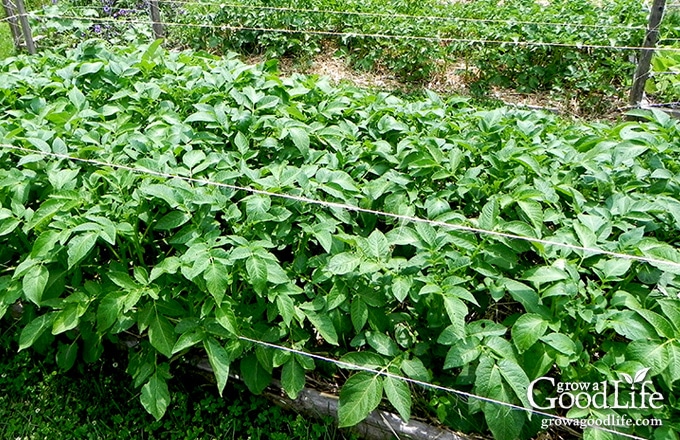
This planting approach works best if you want to experiment with intensive planting techniques to increase productivity. Learn More: Planting Potatoes the Grow Biointensive Way.
Other Ways to Grow Potatoes
In addition to the methods above, potatoes can also be grown using alternative approaches such as straw mulch, raised beds, or potato towers. These methods can be useful in certain situations and are often adapted to fit individual garden spaces.
If you’d like to explore these options and compare the pros and cons of each, this guide breaks them down in more detail: Ways to Grow Potatoes: How to Choose the Best Method for Your Garden.
Caring for Potato Plants as They Grow
Once your potatoes are planted, ongoing care is fairly simple but important. A little attention throughout the growing season helps plants stay healthy and encourages healthy underground tuber development.

Watering Potatoes
Potatoes grow best with consistent moisture, especially once plants begin flowering and forming tubers. Too little water can reduce yields, while uneven watering may lead to misshapen or cracked potatoes.
Water deeply when needed, aiming to keep the soil evenly moist but not waterlogged. Container-grown potatoes may need more frequent watering, as pots and grow bags tend to dry out faster than garden soil.
Hilling and Mulching
As potato plants grow, soil or mulch is often added around the base of the stems. This process, known as hilling, helps protect developing potatoes from sunlight and encourages better yields.
Depending on how you’re growing potatoes, hilling may involve pulling soil up around the young plants, adding straw or mulch, or topping off containers as stems grow taller. The goal is to keep tubers covered and shaded as they develop.
Managing Weeds and Competition
Potatoes don’t compete well with weeds, especially early in the season. Keeping the area around plants weed-free helps ensure nutrients and water are available for tuber growth.
Mulching can help suppress weeds while also retaining soil moisture, making it a useful tool for potato care.
General Tips for Healthy Growth
Pay attention to your plants as they grow. Strong, upright stems and healthy green leaves are signs that things are going well. Yellowing leaves, poor growth, or pest damage are signals to investigate early so small problems don’t become bigger ones.
Even with good care, it helps to be aware of common potato pests and diseases so you can recognize issues early and take action if needed.
Common Potato Pests and Diseases
Potatoes are generally easygoing plants, but like all garden crops, they can occasionally run into pest or disease problems. The key is knowing what to watch for so you can respond early if needed.
Colorado Potato Beetles and Three-Lined Potato Beetles
Two of the most common pests you will encounter on potato plants are the Colorado potato beetle and the three-lined potato beetle. Both feed on potato foliage, and heavy infestations can reduce plant vigor and yields if left unchecked.
In my own garden, these two beetles are the pests I encounter most often when growing potatoes. Regularly checking plants, especially under the leaves, and removing beetles or larvae by hand can reduce damage.

Potato Diseases and Blight
Fungal diseases, including various forms of blight, are more likely to appear during periods of cool, wet weather. Providing good air circulation, spacing plants appropriately, and avoiding overhead watering can help reduce the risk.
If disease does appear, promptly removing affected plant material and practicing crop rotation year to year can help limit its spread and protect future crops.
Prevention Is the Best Approach
Healthy soil, consistent watering, and regular observation are the best defenses against most potato problems. Catching issues early usually means simpler solutions and less impact on your harvest.
When and How to Harvest Potatoes
Knowing when to harvest potatoes makes a big difference in both flavor and how well they store. Potatoes can be harvested at different stages depending on how you plan to use them.
Harvesting New Potatoes
New potatoes are young, tender potatoes harvested before the plants have fully matured. They’re usually ready 2 to 3 weeks after the plants finish flowering, once tubers have reached a usable size.

Digging new potatoes is like finding buried treasure. To harvest, gently dig around the base of the plant and remove a few potatoes as needed, leaving the rest to continue growing. New potatoes have thin skins and are best enjoyed fresh, as they don’t store well.

Harvesting Potatoes for Storage
If you plan to store potatoes for winter, allow plants to fully mature before harvesting. Storage potatoes are ready when the foliage yellows and dies back, and the potato skins have thickened.
After the tops die back, wait about 1 to 2 weeks before harvesting, if the weather allows. This helps toughen the skin and improves storage quality.
Harvesting Storage Potatoes
When harvesting, use a garden fork or shovel and dig carefully to avoid damaging the tubers. Bruised or cut potatoes should be used for fresh eating rather than stored.

Gently brush off excess soil, but avoid washing potatoes before curing or storage. Washing introduces moisture that can lead to spoilage. Handle potatoes carefully to prevent bruising, which shortens storage life.
Once harvested, potatoes are ready to be cured and stored or preserved, depending on how you plan to use them.
How to Cure and Store Potatoes
Curing allows freshly harvested potatoes to heal small cuts and thicken their skins, which improves storage life. To cure potatoes, place them in a dark, well-ventilated area with moderate humidity and temperatures around 50–60°F (10–16°C) for about 1 to 2 weeks.
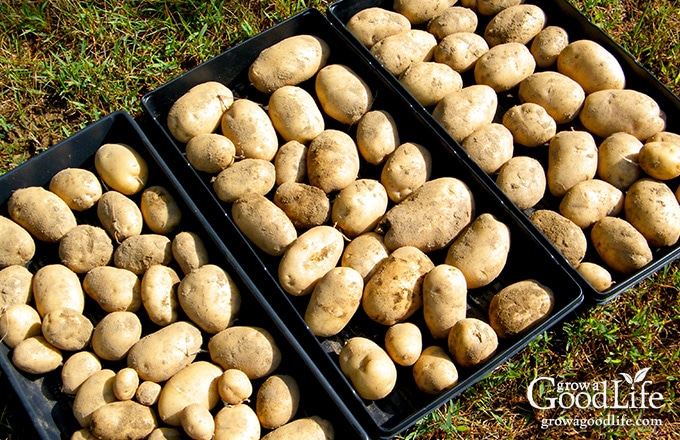
If you’re growing potatoes for winter use, proper curing and storage make all the difference. This guide walks through curing conditions, storage options, and common mistakes to avoid: How to Store Potatoes for Winter.
Additional Ways to Preserve Potatoes
If your storage conditions are not ideal, or storage space is limited, here are other ways to preserve your harvest. These guides cover safe ways to freeze or can potatoes for later use:
Freezing Potatoes for Later
Having prepared potatoes in the freezer is a convenient way to make quick meals. Frozen potatoes can be used in soups, casseroles, skillet meals, and other cooked dishes.
Because potatoes don’t freeze well raw, a bit of prep before freezing helps maintain texture and quality. You can learn more with our guide: How to Freeze Potatoes.
Freezing Homemade Potato French Fries
If you enjoy making your own fries, freezing them ahead of time can save time on busy days. This method allows you to prep fries from fresh potatoes and have them ready to fry, bake, or air-fry straight from the freezer. Learn How to Freeze Potato French Fries.
Canning Potatoes for Shelf Storage
Pressure canning is a reliable way to preserve potatoes for long-term, shelf-stable storage. Canned potatoes are convenient for quick meals and don’t require freezer space, making them a good option if you grow a large potato crop. Check out this article for the full canning tutorial: How to Can Potatoes.
Growing Potatoes with Confidence
With a little planning and care, homegrown potatoes can become a reliable and delicious part of your garden year after year.
Whether you enjoy potatoes fresh from the garden, stored for winter meals, or preserved for convenience, growing your own gives you flexibility and flavor you won’t find at the store. From the first green shoots pushing through the soil to the simple pleasure of digging up a harvest, potatoes reward a little patience with generous yields and incredible flavor.
As you gain experience, don’t be afraid to experiment with different varieties, growing methods, or preservation techniques. Each season offers a chance to learn, adjust, and enjoy the simple satisfaction of growing food for your own table.
Want to Learn How to Grow Potatoes?
You will find everything you need to start growing potatoes in my PDF eBook, Grow a Good Life Guide to Growing Potatoes. Whether you are striving for a few gourmet fingerling potatoes or a large crop for winter food storage, this guide will show how you can grow your own, organic, homegrown potatoes.