Ways to Grow Potatoes: How to Choose the Best Method for Your Garden
This post may contain affiliate links, which means that I may receive a commission if you make a purchase using these links. As an Amazon Associate I earn from qualifying purchases.
Compare different ways to grow potatoes and learn which method works best for your space, soil, and harvest goals. Includes pros and cons of each approach.

Whether you’re growing a few gourmet fingerling potatoes for fresh meals or planting a larger crop to store through the winter, potatoes are one of the most satisfying vegetables to grow. There’s something a little magical about planting a small seed potato and uncovering a generous harvest beneath the soil months later. It really does feel like a treasure hunt every time you dig them up.
Because potatoes are so adaptable, there’s more than one way to grow them successfully. Choosing how to grow your potatoes can feel almost as challenging as deciding which varieties to plant. Some methods work best for small spaces or patios, while others are better suited for larger gardens or long-term storage crops.
If you’re looking for a complete, start-to-finish overview of growing potatoes, including seed selection, planting, care, harvesting, and storage, start here: How to Grow Potatoes: A Complete Guide for Home Gardeners.
This guide walks through several reliable ways to grow potatoes, comparing the pros and cons of each method to help you decide what makes the most sense for your garden. You’ll also find notes based on real-world experience, including when certain popular or trending methods may not deliver the results they promise.
Growing Potatoes Using the Trench and Hill Method
The trench and hill method is the most traditional way to grow potatoes. It involves planting seed potatoes in shallow trenches and gradually hilling soil up around the plants as they grow. This approach has been used by farmers for generations and adapts well to backyard gardens.
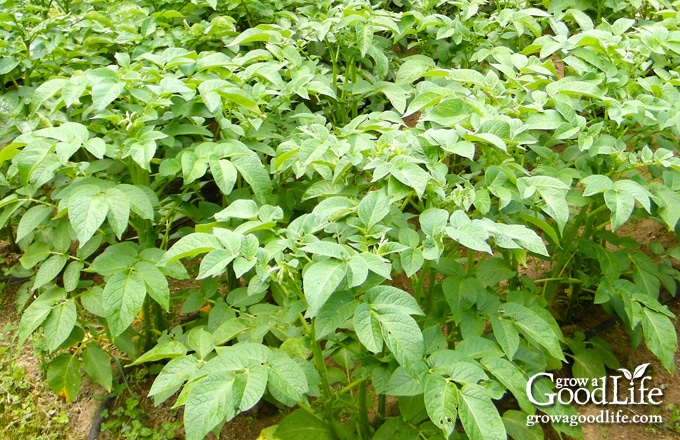
This was the first method I used when I started growing potatoes. Trenches are typically dug a few feet apart, seed potatoes are planted at the bottom, and soil from between the rows is pulled up around the plants as they grow. Hilling helps protect developing tubers from sunlight, supports the stems, and encourages additional tuber formation along the buried stems.
Best for: In-ground garden beds, larger growing spaces, or a goal of growing a lot of larger potatoes for winter storage.
Pros:
- Proven, reliable method.
- Produces consistent yields.
- Well-suited for larger crops.
- Works with a wide range of potato varieties.
Cons:
- Requires more space than other methods.
- Involves repeated hilling during the growing season.
- Can be labor-intensive, especially in compacted soil.
The trench-and-hill method is a solid, dependable choice if you have the space and don’t mind a bit of extra digging at planting time and hilling every few weeks. It’s especially well-suited if you are growing potatoes as a staple crop rather than just a small harvest for fresh eating.
- For step-by-step planting instructions and hilling tips, see: How to Grow Potatoes: Trench and Hill Method.
Growing Potatoes the Biointensive Way
The biointensive method focuses on improving soil health and using space efficiently to grow productive crops in a smaller area. Instead of planting potatoes in long rows and hilling soil around the plants, this method relies on deep soil preparation and closer spacing to support strong growth.
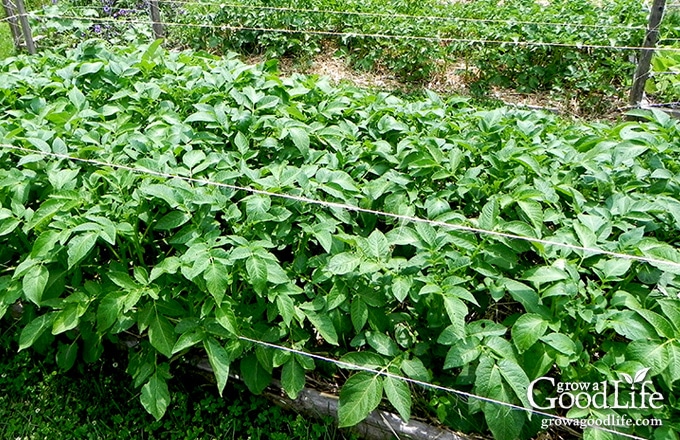
In the biointensive approach, potatoes are planted in deeply prepared beds that have been amended with plenty of compost. Seed potatoes are typically planted closer together, often in offset or hexagonal spacing, which helps maximize growing space and create a beneficial microclimate within the bed. Because the soil is loose and well-fed, hilling is usually unnecessary.
Best for: Gardens with limited space, well-prepared garden beds, or a focus on improving soil health.
Pros:
- Makes efficient use of garden space.
- Encourages strong root development.
- Eliminates the need for repeated hilling.
- Works well in intensively managed beds.
Cons:
- Requires thorough soil preparation.
- Not ideal for compacted or poorly amended soil.
- Takes more upfront effort before planting.
This is my favorite way to grow potatoes. I’ve found that the biointensive method produces healthy plants while making the most of limited garden space, especially in beds that are regularly amended with compost.
Over the years, I’ve adapted the biointensive method to suit my own garden. Since I don’t walk on my garden beds, once the soil is loose and healthy, there’s no need to double-dig every season. Adding finished compost and organic amendments at planting time has been sufficient in my experience.
- If you’d like to learn more about spacing, soil preparation, and planting details, this guide walks through the biointensive method step by step: Planting Potatoes the Grow Biointensive Way.
Growing Potatoes in Containers and Grow Bags
Growing potatoes in containers or grow bags is a practical option if you have limited space or poor soil. Potatoes grow well in pots, 5 gallon buckets, and fabric grow bags as long as they have enough room, good drainage, and consistent moisture.

With this method, seed potatoes are planted in a container filled with loose soil, and additional soil or compost is added as the plants grow to keep developing tubers covered. Containers can be placed on patios, driveways, or anywhere that receives full sun, making this a flexible option for small yards or urban gardens.
Best for: Gardeners with limited space, patios or balconies, poor native soil, or a preference for portable garden setups.
Pros:
- Works well in small spaces.
- Easy to control soil quality and drainage.
- Harvesting is simple and low-effort.
- Containers can be moved to optimize direct sunlight exposure.
Cons:
- Requires more frequent watering.
- Soil can dry out quickly in hot weather.
- Yields are often smaller than in-ground plantings.
Growing potatoes in containers is a good option if you’re short on space or want to avoid digging. While container-grown potatoes may not produce the same large yields as in-ground methods, they’re often easier to manage and harvest.
- For detailed instructions on choosing containers, soil mixes, and planting depth, see: How to Grow Potatoes in Containers.
Growing Potatoes with Straw or Mulch
Growing potatoes with straw or mulch is a low-dig method that relies on covering seed potatoes with loose organic material instead of repeatedly hilling soil. After planting, potatoes are layered with straw, shredded leaves, or other organic mulch as the plants grow, keeping developing tubers covered and protected from sunlight.
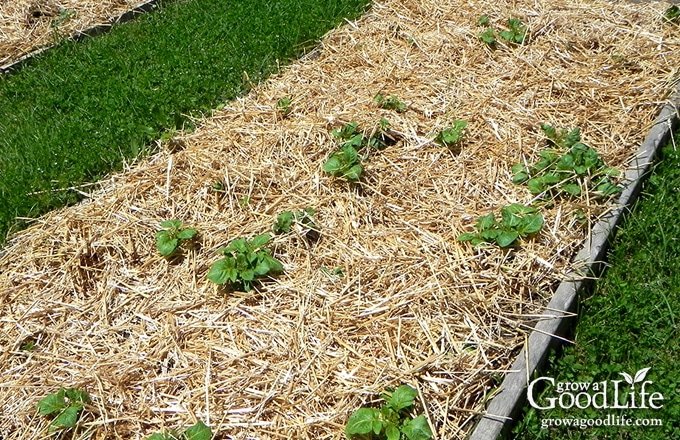
I’ve tried this method in my own garden, and it can work well under the right conditions. Because the mulch stays loose, harvesting is easy, often as simple as pulling the mulch aside to gather potatoes. This makes it an appealing option if you want to avoid digging or working with heavy or compacted soil.
Best for: Gardeners interested in low-dig gardening, easy harvesting, or improving soil structure over time.
Pros:
- Minimal digging required.
- Easy harvest.
- Helps conserve soil moisture.
- Organic mulch improves soil as it breaks down.
Cons:
- Requires a large amount of straw or mulch.
- Mulch can attract rodents in some areas.
- Yields may be lower or less consistent than in-ground methods.
- Tubers must be well covered to prevent greening from light exposure.
- Not ideal in very wet climates, where mulch can stay too damp.
Growing potatoes with straw or mulch can be a useful option if you have access to clean, weed-free mulch and are comfortable monitoring for pests. While it may not produce the highest yields, it offers a lower-effort way to new grow potatoes and can be worth experimenting with in a small space of the garden.
Growing Potatoes in Raised Beds
Raised beds are a popular option for growing potatoes, especially as metal raised beds have become more common in home gardens. While raised beds aren’t a distinct planting method in themselves, they provide a controlled growing environment that works well with several potato-growing techniques.
Potatoes can be grown successfully in raised beds using either the trench-and-hill mound method or the biointensive planting approach, depending on the bed depth and spacing. The key advantage of raised beds is improved soil structure. Because the organic matter is added and managed intentionally, it’s often looser, better drained, and easier to amend than native ground soil.
Best for: Gardeners with poor native soil, limited in-ground space, or existing raised beds (including metal raised beds).
Pros:
- Excellent drainage and soil control.
- Easier soil preparation and amendment.
- Soil warms up faster in spring, allowing for early planting.
- Works well with multiple potato-growing methods.
Cons:
- Depth matters. Shallow beds may limit tuber development.
- Still requires hilling or mulching, depending on the planting method.
- Can dry out faster than in-ground beds, especially along the edges.
Raised beds are a flexible option for growing potatoes, particularly if you already garden this way. By choosing the planting method that fits your bed depth and spacing, raised beds can produce healthy potato crops while making soil management easier overall.
Alternative or Experimental Potato Growing Methods
Potato towers and other vertical growing systems are frequently shared on social media as space-saving ways to grow potatoes. These approaches typically involve adding a layer of soil or mulch around potato plants as they grow, with the idea that tubers will form along the buried stems.
Similar results are often reported with other trending container-style setups, such as growing potatoes in garbage cans, stacked buckets, a round cage made from a wire fence or chicken wire, or improvised vertical containers.
While these methods can work under certain conditions, results are often mixed. In my experience, and based on what I’ve seen from other gardeners, potato towers tend to perform best with late-season varieties that naturally produce tubers along longer vines. Early and mid-season potatoes usually form one main set of tubers near the base, regardless of how much soil is added above.
There are also practical considerations to keep in mind. Vertical systems require lightweight, well-draining soil to prevent compaction, consistent watering since containers dry out quickly, and careful monitoring throughout the season.
Even with good care, yields are not always significantly higher than with simpler methods, and the added effort may not result in a better harvest.
Potato towers and similar setups can be fun to experiment with, especially if you enjoy trying new gardening ideas. However, they’re best approached as an experiment rather than a guaranteed way to increase yields.
Which Potato Growing Method Is Right for You?
The best way to grow potatoes depends on your garden space, soil, and goals. There isn’t a single right method, just the one that fits your situation best.
- If you have plenty of in-ground space and want a larger harvest for storage, the trench and hill method is a reliable, time-tested choice.
- If you garden in smaller beds and focus on soil health and efficiency, the biointensive method may be a great fit.
- If space is limited or your soil isn’t ideal, containers and grow bags offer a flexible, low-commitment option.
- If you prefer low-dig gardening and easy harvesting, growing potatoes with straw or mulch can be worth experimenting with.
- If you already garden in raised beds, potatoes can be grown successfully using either traditional or biointensive methods.
My advice is to try more than one method over time. Start with one that fits your comfort level and space now, and adjust in future seasons.

There’s More Than One Way to Grow Potatoes
Potatoes are one of the most adaptable crops you can grow, and that flexibility is what makes them so fun to experiment with different ways to plant them. Whether you’re growing a small batch for fresh meals or aiming for a full winter’s supply, choosing a method that works with your garden sets you up for success.
If you’re new to growing potatoes, start simple. If you’re experienced, don’t be afraid to experiment and refine your approach over time. Each season offers a chance to learn what works best in your soil, climate, and garden setup.
I’m going to try growing potatoes in burlap bags this season. This was a very informative posts. Thanks for sharing, and I would love to have you join my Sunday’s Best linkup. Many gardeners would love to have your insight on gardening. The linkup starts every Saturday night at 8:00 pm.